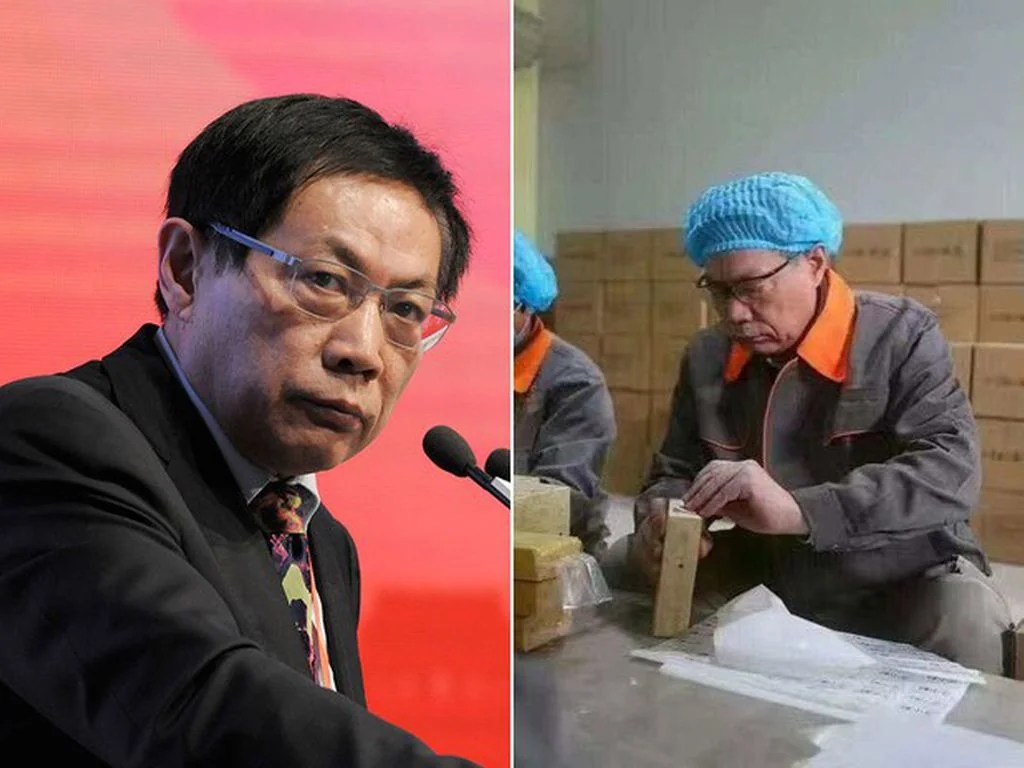
Four years ago, on February 19, when I reposted a photo captioned "CCTV Surnamed Party" on Weibo, I added a comment: "When every media outlet has taken on a surname, and no longer represents the interests of the people, then the people have been abandoned in a forgotten corner." This triggered a "ten-day Cultural Revolution"-style mass denunciation across the entire internet, and I was given a one-year Party disciplinary sanction of "retention in the Party under observation." Ever since, every February 19, I have resolutely set down my pen, in memory of that day. But this outbreak of the Wuhan coronavirus epidemic in China has proven precisely the reality that "when the media all bear the Party's surname, the people are abandoned." Without media to represent the people's interests and announce the truth, all that is left is the outcome of people's lives being harmed jointly by the virus and by the system's own grave illness. A few days later, the media and the internet were abuzz with news that the central authorities had convened, on February 23, a nationwide conference attended by roughly 170,000 people -- said to be the largest central conference in Chinese history, far exceeding the scale of the famous Seven Thousand Cadres Conference at Lushan, and said to carry even greater practical significance than that conference. It was hailed as a great meeting. Online, many people used every means available to hype and glorify the great significance of this conference, placing special emphasis on the lengthy speech by the Party chairman as the most important part of the meeting -- an inspiring, wise, and correct strategic deployment that showed the world the way to prevent and control the epidemic, called for using the strength of the whole-nation system to meet this great test, defeat the epidemic, and achieve a great victory for the system of socialism with Chinese characteristics. It supposedly "demonstrated" that the Party Central Committee's judgment of the epidemic situation was correct, and "showcased the notable advantages of the leadership of the Chinese Communist Party and the system of socialism with Chinese characteristics." For a moment, the whole nation was cheering wildly over the great leader's speech, as if China had once again entered the once-glorious era of the Great Leap Forward, an era of red flags fluttering everywhere, the Little Red Book held aloft, and the people chanting three times over, "Long live the leader, long live, long long live!" Many others found all sorts of angles from which to expound on the "essence" they had discovered in the February 23 speech, believing that China had once again entered a new era. Out of curiosity, I too studied this speech carefully, but what I saw in it was the exact opposite of the "greatness" reported by every news outlet and across the internet. Standing there was not an emperor showing off his "new clothes," but a clown who insisted on continuing to play emperor even after being stripped naked. Though he held up one fig leaf after another to try to conceal the fact that he was wearing nothing at all, he made no effort whatsoever to hide his determination to remain emperor, or his resolve that whoever refuses to let him be emperor will be destroyed! The speech is divided into sections one, two, three, four, and a conclusion. Let me follow the same structure: one, two, three, four, and a conclusion. I. The first section: "On the Epidemic Prevention and Control Work of the Preceding Period" What this section does is praise his own great achievements, including the January 7 directive. "Personally commanding, personally deploying" required the correct strategy and tactics, relying on unified leadership, unified command, and unified action, on the whole-nation system's provision of medical supplies and daily necessities, on maintaining social stability and preventing social disorder, and on strengthening propaganda, education, and guidance of public opinion. In short, it was all major achievements attained through decisions made and personal command exercised by "the one" [Xi], relying on his own "tremendous political courage." There is an online commentator named Li Jin, who has published several books on state-owned enterprise policy and is hailed by the media as "our country's foremost interpreter of state-owned enterprise policy and news." He wrote a lengthy piece specifically titled "The Historic Epic of Epidemic Resistance at the '170,000-Person Conference,'" placing the historic "Seven Thousand Cadres Conference" and the "170,000-Person Conference" side by side as an unprecedented event in Party history bound to be recorded for posterity. His shameless flattery of this conference has reached the absolute limit! The "Seven Thousand Cadres Conference" in Chinese history can be described as a crisis of Party governance, one that raised the message of "not fearing criticism, daring to accept criticism, and daring to engage in self-criticism." It criticized and pursued the truth behind issues such as the "anti-rightist deviation" campaign, the Great Leap Forward, and the concealment of production shortfalls and false reporting. In the end, Liu Shaoqi used the "thirty-seventy" formula, acknowledging that seventy percent of the disaster was man-made error. Mao himself finally offered a self-criticism at the conference: "Whatever mistakes the Central Committee made, I bear direct responsibility, and indirect responsibility too, because I am the Chairman of the Central Committee. I don't mean to shift blame onto others -- other comrades bear responsibility too -- but I should be the first to be held responsible." He also engaged in self-criticism, and afterward some rehabilitation work was carried out, which is how the crisis was overcome. This conference may well have been facing the same kind of crisis of Party governance, yet no one saw any critical opinions raised at it, no pursuit or disclosure of the facts, no clarification of the causes behind the outbreak, and certainly no one offering self-criticism or taking responsibility. Instead, there was an attempt to use various "great achievements" to paper over the truth, as if the epidemic had only begun with the January 7 directive. So what happened last December? Why wasn't information released in time? Why did CCTV run a story on January 1 about pursuing eight "rumor-mongers"? Why the January 3 reprimand? Why was epidemic information reported to the United States on January 3? Why is there no mention of the various crises that had already occurred before January 7? Why was the January 7 directive never made public -- and it still hasn't been to this day! Why, even after January 7, were various mass-gathering national conferences still convened? Why were there still overseas visits? Why was there still drum-beating to celebrate the Spring Festival in Yunnan? ... All of this uses January 7 and January 20 alone in an attempt to terminate and cut off the public's and society's pursuit of the causes behind the outbreak and its spread. No longer mentioning why the epidemic wasn't disclosed in time and so on is precisely because those who hold power do not want to take any responsibility, and refuse to let society hold them accountable. They only want to use "great achievements" to cover their own shame, while at the same time deploying every media outlet under Party control, using so-called propaganda, education, and guidance of public opinion, "regulating and improving the information release mechanism," publicizing the Central Party leadership's decisions and deployments, touting moving and inspiring stories, and channeling "positive energy" in public opinion -- all to firmly block any speech that pursues the truth. They are determined to block any speech pursuing accountability for this epidemic, determined never to acknowledge the role of whistleblowers, and determined never to admit the incompetence of the system and its decision-making! But this kind of face-saving propaganda can probably only deceive those who are willing to be deceived by you -- it cannot deceive those who believe only in facts and the truth. No matter how great the achievements of the current prevention and control efforts may be, they cannot bring back the lives that were lost, the joyful holiday that was lost, or the broken families who lost their loved ones. Nor can they undo the enormous economic losses caused by the epidemic, or restore families' pursuit of a happy life! Throughout the entire speech, there is no mention whatsoever of what caused the epidemic, nor of why it spun out of control and spread. Society at large never saw "early detection, early reporting, early isolation, early treatment" actually happen. Likewise, there is no mention of the flaws inherent in the unified system of Party leadership; no mention of who should bear responsibility for the epidemic's spread; and certainly no examination or self-criticism of the causes and responsibility for all the problems that have arisen since last December. Even emperors of old issued "edicts of self-blame," and even the Seven Thousand Cadres Conference included self-criticism and admissions of fault -- yet this great "170,000-Person Conference" contained nothing but praise and credit, with no causes, no truth, and no accountability. This is nothing like the "Seven Thousand Cadres Conference" at all -- it can only be compared to waving from atop Tiananmen to receive the Red Guards! Self-congratulation that omits the causes, the truth, and accountability is nothing but hindsight so obvious even a fool could see it. The "great and brilliantly correct strategy" was supposed to consist of measures to prevent the epidemic from occurring and spreading in the first place -- yet all of it came only after Professor Zhong's [Zhong Nanshan's] grave warning, not before his urgent cry of alarm. And this dares to call itself brilliant leadership? Dares to boast of it as an achievement? Dares to brag that it "promptly launched a people's war against the epidemic in a timely fashion"? These were plainly remedial measures forced upon them after the fact, patching holes and plugging gaps -- yet they were dressed up as "acting decisively the moment action was called for." Truly, one no longer knows whether there is such a word as "shameless" left in this world! The emperor may deceive himself into thinking he is wearing clothes, but even children know his backside is bare. Those who dare not say the emperor has no clothes still know perfectly well what it looks like to wear new clothes, and what it looks like to wear none at all. Ceausescu believed the people would still believe his lies and deception, never realizing the ship had already turned around! II. On Strengthening the Current Focus of Epidemic Prevention and Control The core of this section lies roughly in the phrase: "resolutely stop, in accordance with the law, any public opinion that uses this opportunity to maliciously attack [the Party]"! The deployment of epidemic prevention and control is telling society that, under the current circumstances, the entire Party and the entire nation have been merged into one, all aboard the same ship. It offloads the causes and responsibility for the outbreak onto governments at every level, while telling the whole Party and society that everyone must unite and work together to achieve victory. Whatever achievements are made are all under my leadership -- without me, none of you would succeed. And if total victory cannot be achieved, then if I die, the Chinese Communist Party dies with me; and if the Chinese Communist Party dies, then China dies too! Therefore, Hubei must be saved, Wuhan must be saved, Beijing must be saved, using the whole-nation system to support the hardest-hit disaster areas and genuinely maintain social stability. In particular, the focus of prevention and control must be on improving the effectiveness of news and public-opinion work -- making sure the entire nation understands that doing prevention and control work well is impossible without me, impossible without the Party, impossible without unified command, and impossible without everyone working together to safeguard "the core." The traditional mindset of imperial authority holds that the state is the sovereign's realm and subjects live at the sovereign's command -- hence subjects share the same fate as the ship they sail on together with the sovereign. Without the sovereign, there is no state, and without the state, there is no position or power for the subjects either. Therefore everyone can only share one fate on the same ship: the ship must be saved first, the sovereign must be preserved first, and only then can the subjects and the people be preserved. But in a modern nation, where the people are the true masters of the realm, this notion of "sharing one fate on the same ship" does not apply, nor does everyone's fate need to be tied to that of the ruling party and its leader. In a democracy, the democratic system allows the people to choose who captains the ship, and to remove and replace that captain as well. Not only can the captain be replaced, but the first mate and the crew throughout the entire management system can be replaced too. The same is true even of modern China: it can do without "the one" [an all-powerful leader], and it can do without a ruling party, but it can never do without the protection of the people's rights and interests. What this epidemic reveals is the reality that the Party protects the Party's interests, officials protect officials' interests, and the sovereign merely protects his own core status and interests as "the one." It is precisely this system that produces a situation where only the sovereign's command is heeded, with no regard for the conditions of the people. When the epidemic had already broken out, no one dared disclose it to the public without the sovereign's order. Not daring to disclose the facts and the truth, they instead arrested and denounced people as spreaders of "rumors," restricting and blocking the spread of the truth -- and it was precisely this that led to uncontrollable spread of the virus. At that stage, no one was actually standing on the same ship -- each was fiercely guarding his own interests, abandoning the people of the nation in the process. But once the epidemic spiraled out of control, the emperor suddenly became the wise commander and planner, binding the entire Party and nation to this ship of his command and deployment, turning everyone into people who must -- and can only -- bear responsibility for the emperor. The emperor can arbitrarily remove any subject unwilling to sacrifice himself in defense of imperial authority, while also invoking the notion of a shared fate on the same ship to demand that everyone fight this defensive battle well for the sake of the Party's interests and meet this great test. If there had been no error in orders from above, how could there be any crisis or great test to begin with? Given that the Party Central Committee had already made an accurate judgment about the epidemic situation, that its personal command had already taken forceful and effective measures, and that every deployment of work was timely -- then why did the epidemic spread nationwide, and globally? None of this was prevention undertaken beforehand or during the outbreak; it was all remedial action after the fact. The crisis only arose once the epidemic had already spread uncontrollably on a massive scale. Had there been genuine prevention beforehand, how could there ever have been a "great test" at all? Every measure being taken now is remedial action taken after the critical window had already been lost -- measures that had to be adopted, out of necessity, to cover up and correct mistakes. The whole world knows that if there had been advance warning and prevention, there would have been no exodus of five million people from Wuhan, no mass gatherings across the city, no hundreds of thousands of close contacts, no tens of thousands of confirmed cases, no thousands of deaths, no Spring Festival spent in nationwide home quarantine, and none of the economic losses from businesses and factories unable to operate! The real focus of prevention and control should not be on these specific tasks, but on the fact that as long as this systemic flaw remains unchanged, then no matter what kind of whole-nation system is used, even if it solves this particular epidemic, another disaster will inevitably strike again. The lesson of seventeen years ago [SARS] never brought about any thorough change to this system, which is exactly why today's epidemic has broken out again. If the root problem is not solved this time, an even greater disaster is bound to occur next time. The cause of the outbreak may not yet be fully established, but the failure to inform the public in time once the epidemic appeared lies in the fact that "without orders from above, those below cannot act." It also lies in the fact that "the media bear the Party's surname," leaving no freedom of the press or of speech -- and now an additional crime of "maliciously exploiting the situation to attack [the Party]" has been added, to be severely punished! The truth does not destabilize social order -- on the contrary, it is the absence of truth that causes social chaos. When the problem has already emerged and society demands that the truth be uncovered, the ruling party instead tries to bind everyone's fate together on the same ship, so that everyone works together to save that ship. It tries to use this notion of being "all on the same ship" to silence the voices demanding that the truth be uncovered and the chief culprit held accountable, and tries to use the pretext of "stopping malicious attacks in accordance with the law" to snuff out any words or actions that might be unfavorable to the sacred sovereign. Even for those on the same ship, responsibility differs at every level. The captain must bear the captain's own responsibility -- something the first mate and crew can never substitute for. The real purpose lurking behind all this is to use the concept of "being one on the same ship" to cover up the responsibility the captain himself ought to bear. Today, "being in the same boat together" does require everyone to work together to solve the epidemic -- but this cannot be used to cover up the captain's own responsibility. III. On Coordinating Epidemic Prevention and Control with Economic and Social Development It is characteristic of the ruling party's culture in "New China" to habitually unify two utterly contradictory conditions under a single proposition. Take the constitutional phrase "people's democratic dictatorship": "democracy" and "dictatorship" are two utterly opposed systems, yet they are merged into one peculiar term that defies rational explanation. According to Chinese dictionaries, before the founding of the People's Republic of China, it carried the task of the democratic revolution; after the founding of the People's Republic, it became, in essence, the dictatorship of the proletariat -- at which point democracy had already vanished, leaving only dictatorship! In central Party documents, one often sees the formula "both such-and-such, and also such-and-such." Whenever "both" and "also" are joined together this way, the two things being defined are usually opposites -- this is, roughly speaking, an art of cutting both ways at once. The earlier part of the speech emphasized the priority of epidemic prevention and control, while the latter part emphasized the priority of economic and social development work -- hence the arrangement calling for both prioritizing epidemic prevention and control and also making sure economic development work is done well. In a democratic country, where information is completely open and public, and the economy regulates itself through market mechanisms, this limited government can never, under any circumstances, use non-market means to control the economy or people's freely chosen way of life. Even amid the dangers of an epidemic, the government may set requirements for epidemic prevention and control, but it need not impose restrictions on the market behavior that people themselves choose. But in a dictatorial, non-market state, totalitarian macroeconomic control becomes an obstacle to the market economy. Under this unified command-and-control system, businesses are required both to obey every strict requirement of epidemic prevention and control, and at the same time to resume production "precisely" -- yet they find it nearly impossible to obtain accurate information about the epidemic, and are further required to bear the primary responsibility for epidemic control themselves and guarantee that no infections occur, making an already difficult task even harder. This epidemic cannot turn entrepreneurs into immortals! An epidemic is a risk that touches on human relationships, on life itself, and is difficult to prevent or control. Running a business likewise carries all sorts of risks, involving employees, shareholders, and upstream and downstream partners. Under a fully market-based system, entrepreneurs would make reasonable assessments and precautionary responses between these two different kinds of risk, and choose an appropriate course of action. But under non-market conditions, making reasonable arrangements becomes nearly impossible. Perhaps your upstream and downstream partners simply cannot cooperate because of the epidemic and various regulations; perhaps your own resumption of production, because of various regulations, cannot meet what your upstream and downstream partners require. Especially when politics is put first, no one can any longer make judgments based on market demand and information, but must instead submit to political responsibility. And who would dare cross that line? When even a full resumption of normal production can hardly be achieved under these conditions, how can one even speak of expanding or protecting employment? Cutting both ways inevitably produces a situation of being caught between a rock and a hard place, but this has become a defining feature of the ruling party's culture. This is precisely why the medical workers on the front lines -- who were supposed to be the main force saving lives -- instead became infected in large numbers and turned into patients needing treatment themselves. Many lives were lost, and many outstanding medical talents were lost as well. Why is it that Zhejiang, which had the second-highest number of patients nationwide, saw not a single medical worker become infected? The reason and the difference lie precisely in this: one approach follows a purely administrative management model, where subordinates obey their superiors absolutely, politics comes first, and information cannot be made public; the other is a market-oriented approach, where information is made public, flexibility is allowed at every level, and the people's interests and rights are respected above all! Economic and social development is indeed under enormous pressure, and the work stoppages and extended holidays have already created many problems for society. But trying to solve these problems through the planned-economy methods of a whole-nation system simply doesn't work effectively. This is exactly why Wuhan issued Order No. 17 before the conference, only to rescind Order No. 17 after the conference. The former was perhaps meant to increase the possibility of resuming work, while the latter emphasized epidemic prevention and control -- resulting once again in the conflict of policies reversing themselves overnight. Whether to rely on centralized planning from the central government or the state, or on the market's own self-regulation, remains the principal contradiction in China's economic development. A few provinces and cities have had the government pay for chartered cars, trains, and planes to bring migrant workers back and support businesses resuming operations -- this may reflect a market-driven need, with the government providing support and supplementing it, but it is by no means a genuinely coordinated arrangement between epidemic prevention and development. Originally, epidemic prevention was the government's proper responsibility, while business affairs belonged to the market's own self-regulation. But this double-edged "coordination" has muddled the two distinct lines of responsibility together! Businesses have themselves become the responsible parties for epidemic prevention, shouldering a burden that should have belonged to the government, while also having their hands tied by "politics first"! Neighboring countries such as Singapore, Japan, and South Korea have all seen outbreaks too, but each country adopted measures suited to its own national conditions. Government bears the government's responsibility, society bears society's obligations, and businesses handle their own operations -- everyone performing their own role meant that, even without centralized coordination, the nation's development and its people's normal lives were not affected. Although the epidemic is not yet over and its future course cannot be determined, the division of labor and the assignment of responsibility in these countries are entirely clear. These countries do not pursue a "great victory" for their leaders -- they pursue only the happiness of their people's lives, and they would never make their people pay for victory with blood and life, nor make the people bear mistaken responsibility that ought to belong to the decision-makers. The state has rolled out a series of policies -- tax cuts, interest-rate reductions, fee reductions -- to support small and medium-sized enterprises in saving themselves and developing, as work resumes. Many people regard this as a heaven-sent blessing. But they fail to realize that if the epidemic had been effectively disclosed to the public early on and dealt with accordingly, would there ever have been the losses and hardships we see today, or any need for various policy supports just to survive? Rather than call this a favor the government is granting to businesses, it would be more accurate to call it the bitter fruit of the government's own inaction -- compensation it rightly owes. In the effort to fight the epidemic in Wuhan, what one saw far more of was not the Party and the government leading the way, but various civic organizations and private enterprises leading the way, selflessly contributing a great deal -- doing their part to save human lives. Without this support and assistance from civil society, the government would never have made it this far! Although the central government has allocated over a hundred billion yuan to support epidemic prevention and treatment, had it not been for the earlier, irresponsible mistake of concealing the epidemic, would there ever have been this subsequent development and this forced expenditure? The government's spending is a remedy for its own mistaken decisions, while civil society's contributions are meant to protect the people's interests from harm caused by the government's own errors. These are two entirely different things -- they cannot be equated or conflated, and still less can the government's responsibility be confused with civil society's contributions. But in the eyes of "the one," all of this stems from his own great personal command and personal deployment! This difference in perception, more importantly, reflects a difference in character and moral quality! IV. Strengthening the Party's Leadership This is actually the most important part of the entire speech. Quoting Emperor Taizong of Tang's line, "Fierce winds reveal sturdy grass; times of turmoil reveal loyal ministers," it lays bare, in a single stroke, the sovereign's true intent. The point is not that I myself must be placed above all -- the point is that organizations at every level must implement the sacred edict, let the Party flag fly high, and above all use this epidemic to sort out who the loyal ministers truly are. If you charge to the front, you will surely be put to use by me; if you fall back, you will surely be struck down by my "absolute intolerance"! At the critical moment you must charge forward, and the critical moment will be used to vet cadres and entrust them with heavy responsibilities. The responsibility for this epidemic is attributed to shortcomings in the major epidemic prevention and control mechanism and the public health emergency management system, rather than to any dereliction or failure of duty in the Party's leadership -- thereby shirking the Party leadership's own related responsibility. Even as it loudly proclaims the need to strengthen Party leadership and loudly touts the credit of his "two personallys" [personally commanding, personally deploying], it simultaneously shifts blame, even while strengthening Party leadership, onto shortcomings that exist under that very leadership -- as if this could allow it to dodge society's demand for accountability over the failure to disclose the truth about the epidemic in time. But this is exactly what exposes the root disease of this system. Every problem that exists within the Party organization mentioned in this speech ultimately traces back to a ruling party that answers to no oversight from the people, is bound by no law, and is loyal only to imperial authority and to preserving "the core" -- the inevitable result of a chain of accountability that puts being answerable to the Party first and the people second. The most successful part of China's reforms was "separating the Party from government, and separating government from enterprise." The very first thing the contract responsibility system had to break was the notion of Party leadership deciding everything. The point of the contract system was to let the people themselves have the final say, answerable to themselves while also answerable to the people. Pay the state its due first, then the collective, and what remains is one's own. If Party leadership is insisted upon in every respect, how can there be any real contracting at all? The simplest truth here is this: if you insist on leading, then you must bear responsibility. Just as this epidemic broke out precisely under the principle that "east, west, south, north, and center -- everything submits to the Party's leadership," then the responsibility here is not a matter of this or that specific shortcoming, but the responsibility of the Party's leadership itself. The contract system, by contrast, cut through Party leadership while clearly identifying who bore responsibility -- and that is precisely why the reforms succeeded. When this country reverts once again to a governing system in which the Party leads everything, yet the Party never bears responsibility for the problems that arise, then not only will epidemics break out that never should have, but they will also be allowed to spread to the point of harming economic development and the people's health and happiness -- and perhaps even more serious problems will emerge under the Party's leadership in other respects as well. From the wholesale repudiation of the spirit of Deng's series of speeches to the amendment of the constitution, everything proves that this ruling party is trying to reestablish a one-party dictatorship in the form of a party-state system. This one-party dictatorship also violates the spirit of the constitution, kicking the people out and having the Party replace "people's democracy." What we have seen ever since is the Party's Discipline Inspection Commission directing the state's Supervision Commission, the Party's Cyberspace Administration directing what should be state institutions, and the arbitrary drafting of regulations that override national law itself. This country has therefore long since ceased to be a matter of "the Party's leadership" -- it has become a state that belongs only to the Party, with no interests or rights left for the people at all! This passage also tells every Party member: today, all of you are on the same ship, but if you fail to work hard to save this party-state ship, I will throw you overboard and leave you without so much as a burial ground! And don't even think about becoming a "deserter" -- no way! The blade of ever-tightening accountability is already pressed against your neck! The conclusion of the speech lays out three requirements and quotes a famous classical poem to encourage the whole Party to resolve firmly to charge to the front lines, and to implement, and keep implementing, these directives affirming that the Party leads everything. What I am simply curious about is this: the emperor brought up again a remark he had already made back in January 2018, that "for major infectious diseases like SARS, one must remain vigilant at all times and guard closely against them," insisting on "constantly maintaining the caution of one walking on thin ice, and the keen perception to sense autumn from a single falling leaf... offering opinions and suggestions at the very first moment." But why, this time, was that standard never applied to himself? The emperor claims he issued a directive on January 7 of this year, which shows he already knew the special and dangerous nature of the epidemic -- otherwise, why issue a directive at all? But then why did this "sensing autumn from a single leaf" acuity fail to make that directive public, or even reveal the slightest bit of information about the epidemic to society? China had already reported the epidemic situation to the United States on January 3 -- so why did this walking-on-thin-ice caution fail to also announce, to the Chinese people, the very same information that had been reported to the United States on January 3? From beginning to end, all I can see throughout this speech is one lie after another used as a fig leaf, trying to conceal the plain fact that he is wearing no clothes at all. In trying to prove his own brilliance and greatness, he has instead trapped himself in a predicament he cannot talk his way out of. The harder he blows, the higher that fig leaf flies away, exposing all the more his inner fear and his naked ambition to preserve his imperial status. Perhaps these slogans and classical verses will inspire many people, but anyone with clear sight can see behind this beautiful ornamentation: he has no intention whatsoever of taking any responsibility for this outbreak or for his own leadership failures. Instead, he is preparing to use the "victory" over the epidemic -- purchased with the efforts and the very lives of the whole nation's people -- to celebrate himself, readying himself to receive the whole nation's cheers of "long live the emperor" as the fruits of this battle. By concealing the causes behind the initial outbreak of the epidemic and then relying on the whole-nation strength of the subsequent lockdown, China's ruling party managed to deceive the World Health Organization into trusting it, and won international praise. But the Chinese people who lived through it cannot be so easily deceived a second time. People living in democratic nations with freedom of speech may not know the pain of living without a free press and free speech, but the Chinese people know that this outbreak, and all the suffering it triggered that never should have happened, stem entirely from this system that strictly forbids freedom of the press and freedom of speech. No matter how many shortcomings exist in China's management system, if there had been freedom of speech, the public, upon learning the truth in advance, would have taken every kind of self-protective measure on their own initiative, and such a severe loss of control and spread would never have occurred. Take Li Wenliang's WeChat message, branded as a "rumor" -- wasn't he simply warning his friends and relatives to guard strictly against the spread of the epidemic? Had this not been treated as a rumor, but instead turned into an official government warning to society, would there ever have been any need for the January 7 directive and everything that followed? Perhaps the free circulation of information among the public alone would have already achieved a great victory over the epidemic, and none of the enormous price paid afterward would ever have had to be paid at all! No matter how much the Party's leadership and the "two personallys" are glorified, none of it can explain to the Chinese people the January 1 CCTV broadcast about arresting and denouncing "rumor-mongers," and none of it can change society's overall demand for accountability over the outbreak. Perhaps not today, but sooner or later, the debt this party owes the people will have to be repaid! I cannot cheer for the February 23 speech. Instead, I see in it an even greater crisis -- one that will ferment all the faster amid the very voices cheering for that speech. When shameless and ignorant people try to content themselves with surviving inside the folly of a "great leader," this society will find it hard to develop or even sustain itself amid such a mindless mob. Perhaps, in the not-too-distant future, the ruling party will also wake up from this foolishness, launch another campaign to "smash the Gang of Four," carry out another Deng Xiaoping-style reform, and once again save this nation and this country! At the February 24 conference where the public security system studied the February 23 speech, the signal given was "politics first." The nation's entire public security apparatus is to mobilize for the sake of "politics first" -- pick up knives, shoulder guns, resolutely eliminate every force that "maliciously exploits the situation to attack [the Party]," and preserve social stability at any cost! Are you willing to become that cost? Can paying that cost wake you from your dream?
Ren Zhiqiang: Xi Jinping Is Like a Clown Who Insists on Playing Emperor Even After Being Stripped Naked
2025-04-29