
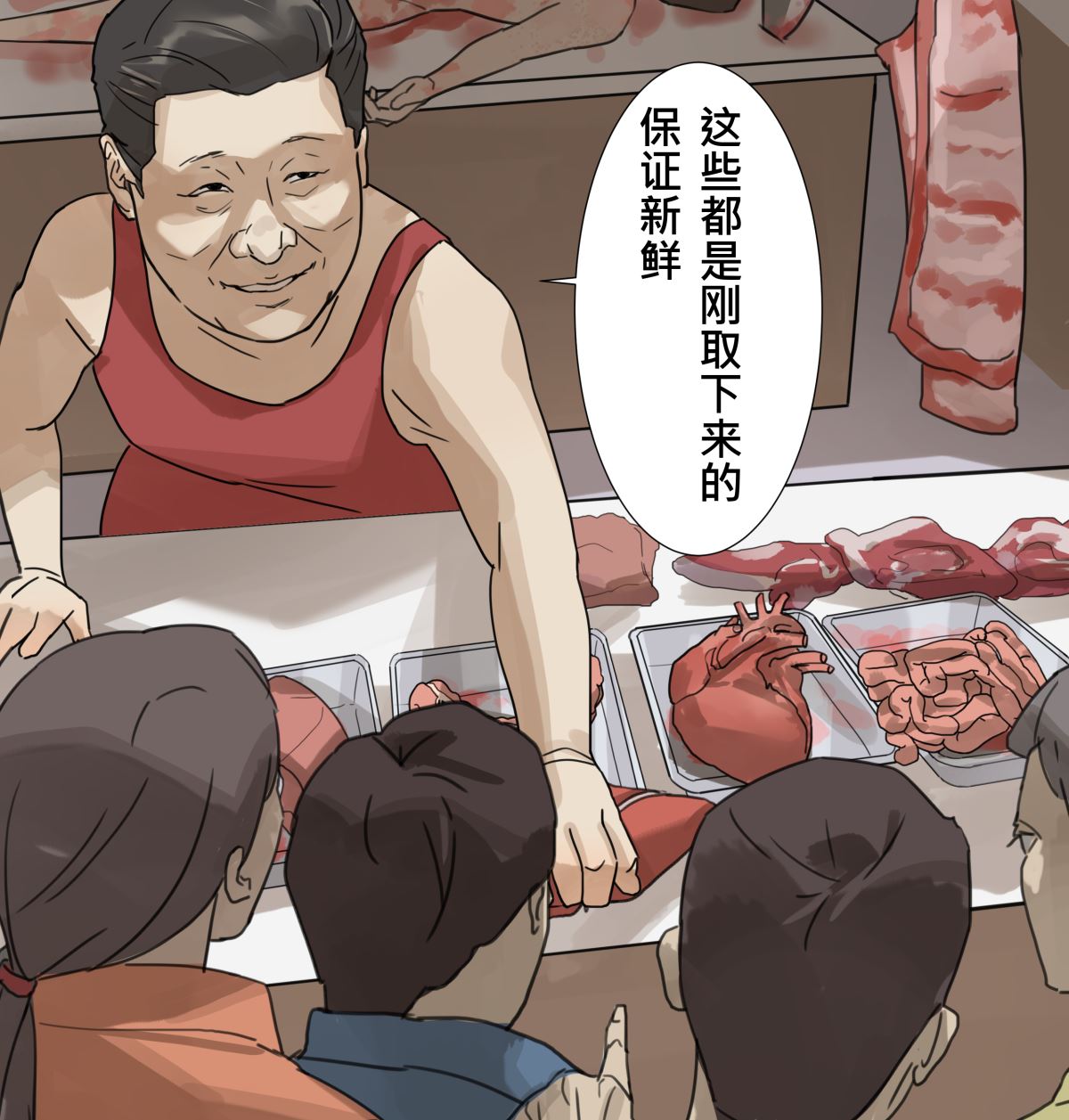
Media reports indicate that a "human organ transport corridor" exists not only in Xinjiang but also in Qinghai Province, where a "human organ green channel" has likewise been opened. (New Tang Dynasty Television Asia Pacific)
At present, cases of missing teenagers and children keep occurring across mainland China, leaving parents deeply anxious and fearful that disaster might befall their own children. From the bizarre fatal fall of 28-year-old medical intern Luo Shuaiyu, to the case of high school student Hu Xinyu, hastily ruled a "suicide"; from more than a dozen Wuhan University students inexplicably vanishing "into thin air," to young children being rapidly declared "brain-dead" after hospital admission; to the large number of organ transplant cases with unexplained sources — a steady stream of abnormal incidents and unsolved mysteries has triggered widespread concern and deep unease across society over the hidden truth behind China's organ transplant sourcing.
Since The Epoch Times first exposed the CCP's atrocity of forcibly harvesting organs from Falun Gong practitioners in 2006, numerous experts, scholars, physicians, lawyers, investigative journalists, and organizations such as the World Organization to Investigate the Persecution of Falun Gong have continued to conduct in-depth, detailed investigations. The evidence gathered shows:
This is a state-level campaign of slaughter ordered by then-CCP leader Jiang Zemin and jointly carried out by multiple agencies — the Political and Legal Affairs Commission, the former "610 Office," public security, the courts, prisons, medical institutions, the armed police, and the military. Initial victims were primarily Falun Gong practitioners, underground church members, and ethnic minorities such as Uyghurs; the scope of persecution later expanded rapidly to ordinary citizens, and even infants have not been spared.
At the same time, growing evidence shows that the CCP is exporting its long-established illegal organ transplant industry model abroad through the "Belt and Road Initiative," promoting organ transplant cooperation programs in multiple countries and building a transnational organ transplant network. Under the guise of medical cooperation and technical assistance, the CCP is attempting to repackage its industrialized organ transplant model as "advanced medicine," using this to entangle more countries and governments, cover up its crimes against humanity, extend its transnational persecution, and build a system for exporting its own political interests to other nations.
As early as 2010, Huang Jiefu, then deputy minister of the CCP's Ministry of Health, publicly stated that he had once obtained two backup livers in Xinjiang with just two phone calls — his casual tone, as if placing an order, was shocking. Xinjiang's airport even had a designated "human organ transport corridor." In 2019, it was revealed that Xining Caojiabao International Airport, capital of Qinghai Province adjacent to Xinjiang, had also opened a "human organ green channel." The speed and scale of organ allocation has long exceeded what could be considered normal. Reports further reveal that the CCP has even used the enormous profits from the organ transplant industry to bribe foreign officials in exchange for their silence and compromise on the international stage.
This unprecedented crime of forced organ harvesting has already challenged the moral bottom line and basic humanity of the entire human race. When a regime treats living human organs as a tradeable "state resource" and builds an industry, expands its political interests, and extends its international influence on this basis, the international community's continued silence will lead to a severe humanitarian and moral crisis.
The Luo Shuaiyu Case Exposes the Dark Secrets of Organ Transplants as Teenagers Keep Vanishing Mysteriously
On May 8, 2024, Luo Shuaiyu, a medical intern at Xiangya Second Hospital affiliated with Central South University, died in a bizarre fall from a building. After a year-long investigation, police ruled it a "suicide." However, a 1,119-page report of allegations that his family recovered from his computer revealed serious problems inside the hospital, including illegal surgeries and children's organs of unexplained origin — triggering public shock and deepening suspicions about the dark secrets behind China's organ transplants.
Before his death, Luo Shuaiyu was studying at Xiangya Medical College, specializing in kidney transplantation. He was only weeks away from graduation when he fell. Authorities claimed he jumped alone through a 0.8-meter-high opening on the roof of the hospital dormitory building, with no signs of struggle. But his family found that his shirt was missing buttons, his glasses were shattered, and there were bloodstains and signs of a struggle in his dormitory. The scene was about 7 meters from the wall, making it difficult for him to have jumped unassisted — raising questions of whether he was "made to commit suicide."
More concerning still, using professional methods, the family recovered documents weighing 16 jin (about 8 kg) from his wiped computer, revealing extensive illegal medical practices at Xiangya Second Hospital, including forcibly removing healthy organs, fabricating diagnoses, manufacturing transplant needs for patients, and even suspected "ordering" of children's organs.
According to audio evidence, Luo Shuaiyu had once been asked to source organs from 12 children as "specimens"; in another recording, someone joked, "This time we're going to make a fortune," apparently hinting at profits from organ trafficking. Even more shocking, Luo's relatives said that during his internship he took part in more than 200 kidney transplant operations, with some of the money flow tied to nursing staff, and his personal bank account showed transactions totaling as much as 440,000 yuan.
At the time of Luo's death, Liu Xiangfeng, deputy director at Xiangya Second Hospital, was already under investigation, and was later sentenced to 17 years in prison on charges including performing surgery based on fabricated diagnoses, accepting kickbacks, and medical corruption. According to the allegations, he once ordered the removal of nearly five feet of small intestine, claiming it had "other uses."
In addition, the World Organization to Investigate the Persecution of Falun Gong has for years exposed the CCP's forced organ harvesting, listing Xiangya Second Hospital and several of its doctors as implicated parties, noting that the hospital's abundant organ supply and unusually short transplant waiting times are consistent with the characteristics of illegal organ sourcing.
The opacity of the organ transplant system drew renewed attention in another case. In April 2025, CCP state media prominently reported that Taiwanese singer Tank (Lu Chien-chung) had successfully undergone a combined heart-liver transplant at the Second Affiliated Hospital of Zhejiang University and been discharged, claiming the organs came from a brain-dead "great love donor." But Taiwan's medical community questioned this, noting such organ sources are extremely rare, and the CCP has never provided complete donor information. Under Taiwanese law, anyone receiving an organ transplant in China must legally register the source of the transplant, yet this case lacked basic transparency and traceability.
Similar suspicious cases are not isolated. Hu Xinyu, a 15-year-old student at Jiangxi's Zhiyuan High School, mysteriously disappeared during evening study on the night of October 14, 2022. Police searched for over a hundred days without success until January 28, 2023, when they claimed the cause of death was suicide by hanging. However, the case was riddled with holes, drawing nationwide attention.
The Epoch Times, citing sources inside Jiangxi's public security system, reported that Hu Xinyu actually met with misfortune on the very day he went missing, and that his organs had already been removed and transported to an operating room in Shanghai. According to some sources, the organs sold for as much as several hundred million yuan.
In November 2022, 14-year-old Liu Aocheng from Wuhan mysteriously vanished after taking out the trash. His mother, Li Lianchun, repeatedly reported this to police but has yet to receive any effective response.
In January 2023, 19-year-old Hua Canhao from Leping, Jiangxi, disappeared on the night of the first day of the Lunar New Year, becoming yet another case of a missing teenager. According to statistics compiled by Radio Free Asia, from October 2022 to early 2023, at least a dozen cases of teenagers mysteriously disappearing were reported across multiple Chinese provinces and cities, including Jiangxi, Guangdong, Jilin, and Guangzhou.
Pan Lu, a former teacher at a Suzhou middle school, pointed out that as early as 2017, more than a dozen university students in Wuhan had inexplicably gone missing, with the cases still unresolved today. Education commentator Lin Shengliang told Radio Free Asia that ever since the CCP legalized its organ transplant system, it has opened up vast "underground spaces," making the commercialization of organs even more concealed. He added that Huang Jiefu, former deputy minister of health, has repeatedly said he wants to turn China into "the world's largest organ transplant country" — a policy that is gradually being realized, potentially at the cost of human lives.
Brain-Death Organ Donations Are Occurring Nationwide, and Even Infants Are Not Exempt
At the end of 2023, the CCP announced that the "Regulations on Human Organ Donation and Transplantation" would take effect on May 1, 2024. Since then, reports of organ donations following brain death have appeared across China, including cases involving young children.
According to a Ningbo Daily report on June 1, 2024, 8-year-old Huang Zhiyi from Jiangxi was struck by a car and transferred to the Women and Children's Hospital affiliated with Ningbo University. A month later, the hospital declared her "brain-dead," and her liver, two kidneys, and both corneas were "donated." Little Zhiyi was Ningbo's 405th organ donor.
According to a Qilu Evening News report on May 29, 2024, a 2-year-old child in Ningbo accidentally inhaled food into the trachea; 10 days later, doctors declared the child's life could not be saved, and the child's liver, both kidneys, and both corneas were "donated."
According to a Nongmin Channel report on April 25, 2024, 14-year-old Zhang Zide from Hebei suffered a sudden cardiac arrest. After hospital admission, he was declared "brain-dead," and at least five of his organs were "donated."
According to a Sina Hot Topics report on February 2, 2024, a 13-year-old boy from Yangchun was sent to a Guangzhou hospital for treatment after being bullied at school, and was subsequently declared "brain-dead." At least seven of his organs were "donated."
According to a People's Daily report on January 22, 2024, 3-year-old Xixi was involved in a traffic accident and sent to the Guangzhou Women and Children's Medical Center. After 10 days in a coma, the hospital declared her "brain-dead," and both her kidneys, liver, and both corneas were "donated."
Long Xingyu, a 24-year-old graduate student in geological resources and geological engineering at the China University of Geosciences (Wuhan), sprained his knee while exercising in May 2023. On the night of May 23, Tongji Hospital of Huazhong University of Science and Technology confirmed Long was "brain-dead." On May 24, 2023, his heart, one liver, two kidneys, and both corneas were donated. But the fact that he lost his life over a sprained knee drew attention, with one internet user commenting: "Once your organs are a match, even a minor fall could get you declared 'brain-dead' at the hospital."
Newborn Kidney Transplant Cases Face Scrutiny
Two cases of newborn kidney transplants published by Renji Hospital, affiliated with Shanghai Jiao Tong University School of Medicine, have sparked strong questions within the international medical community. In August 2023, urologists at the hospital published an article on the website of the American Journal of Transplantation describing their experience transplanting kidneys from two newborn girls, only 1 to 3 days old, into patients with end-stage renal failure. The study quickly drew scrutiny from the medical community regarding its ethical legitimacy, the process of obtaining the organs, and the transparency of medical decision-making.
According to the article, the first donor was a premature girl born at 29 weeks of gestation, weighing only 1.07 kilograms. The day after her birth, her parents "consented" to donate her kidneys, and the infant was declared dead 20 minutes after life support was withdrawn. The kidney was transplanted into a 34-year-old woman who had not even begun dialysis. The second case involved a premature girl born at 29 weeks and 5 days, weighing 1.17 kilograms, whose kidney was removed three days after birth and transplanted into a 25-year-old woman who had been on dialysis for six years. Neither infant was a brain-dead donor; rather, both were declared to have suffered cardiac arrest after a brief wait following the "withdrawal of life support."
Taiwan's medical community expressed shock. Chen Chih-chin, an attending physician in the intensive care department at Chi Mei Hospital, pointed out that both donors were extremely premature infants weighing less than 1.2 kilograms. According to modern neonatal intensive care standards, the probability of a 29-week infant surviving and growing up healthy is not low. Having families agree to withdraw life support just two to three days after an infant's birth is extremely rare. He questioned: "Who advised them to do this? Was there passive acceptance of medical advice, financial pressure, or deliberate guidance from the hospital?"
Even more concerning is the speed of the transplant process. Zain Khalpey, a surgery professor at the University of Arizona, pointed out that kidney transplant matching usually takes weeks to months, and questioned whether the matching had already been completed before the infants were even born. He stated bluntly that if so, this could involve prenatal organ reservation, violating medical ethics and international norms.
Renji Hospital had already announced in February 2023 that its team had completed 22 cases of kidney transplants using newborns as donors. This number has also drawn outside attention, raising the question of whether newborns are being treated as an "organ supply source."
Through the "Belt and Road," the CCP Exports Its Organ Transplant Model Overseas
The World Organization to Investigate the Persecution of Falun Gong published an investigative report on May 10, 2025 (link), pointing out that the CCP, through the "Belt and Road Initiative," is not only expanding its political and economic influence internationally but also exporting its highly controversial organ transplant model abroad, raising deep international concern about the spread of forced organ harvesting. The report reveals that the CCP has systematized and industrialized its organ transplant sector, using the "Belt and Road" platform to build a transnational cooperation network and push its highly controversial organ-donor model onto the world stage.
The report notes that over the past decade or more, the number of organ transplants in China has surged dramatically, with waiting times far shorter than international norms and donor sources unusually abundant — suggesting the possible existence of a vast, hidden, coercive organ-supply system behind it. Using methods including phone interviews, data comparison, literature review, and field visits, the investigation obtained multiple pieces of evidence pointing to the widespread use of Falun Gong practitioners as living organ donors at numerous Chinese hospitals.
Since 2006, multiple international organizations have conducted independent investigations accusing the CCP of large-scale forced organ harvesting from prisoners of conscience, treating it as part of a broader pattern of crimes against humanity. Although the CCP announced in 2015 that it would stop using organs from executed prisoners, that same year saw organ transplant numbers hit a new high, while donation data from Red Cross chapters in multiple provinces and cities remained close to zero — clearly disconnected from the actual transplant volume.
The investigation further notes that starting in 2016, the CCP incorporated its organ transplant system into the "Belt and Road Initiative," actively promoting cooperation with countries in Asia, Africa, and Europe to develop transplant medical systems. In 2017, Huang Jiefu, former deputy health minister and a key promoter of the CCP's organ transplant program, publicly stated that organ transplantation should be included as an area of "Belt and Road" cooperation. In 2019, at the Fourth China International Organ Donation Conference held in Kunming, representatives from 62 countries jointly issued the "Kunming Consensus" and established the "Belt and Road" Alliance for Organ Donation and Transplantation Cooperation and Development. By 2023, the CCP had funded more than 20,000 projects across 165 countries.
More worrying still, some areas along the "Belt and Road," such as the KK Park compound in Myawaddy, Myanmar, have even been exposed for involvement in organ trafficking and human trafficking crimes — yet CCP officials continue to tout the area as a "key cooperation project."
Experts point out that incorporating organ transplantation into the "Belt and Road" framework may not only conceal forced organ harvesting, but could also legitimize and institutionalize the CCP's illegal industry model, expanding it to more countries.
Conclusion
Today, medical school interns, high school students, ordinary teenagers, and even newborn infants can all become potential victims of the CCP's organ transplant industry chain. What the Luo Shuaiyu and Hu Xinyu cases reveal is not merely individual tragedies, but the tip of the iceberg of a systemic cover-up.
At the same time, the CCP has institutionalized and industrialized its organ transplant system, using the "Belt and Road" platform to promote transnational cooperation and export its organ-sourcing model — one widely condemned internationally as a crime against humanity — around the world.
Allegations of forced organ harvesting by the CCP have drawn international condemnation, with a growing number of countries and organizations calling for independent investigations and for its crimes against humanity to be brought before international tribunals to establish legal accountability.