On September 3, at Tiananmen Square in Beijing — this graveyard at the center of the world's largest city, this bleak and shadowy site once used as the memorial altar for Mao Zedong and Stalin, two of the greatest mass murderers in modern world history, this site of crimes where Mao received Red Guards eight times and drove the decade-long catastrophe of the Cultural Revolution to its frenzied peak, this bloodstained ground of the June Fourth "dum-dum bullets" and the tanks that crushed the city in 1989, this birthplace of the lie known as the "Tiananmen self-immolation hoax" — the CCP's red devil will stage a farce of "flexing its muscles." The CCP has billed this farce as "commemorating the great victory of the War of Resistance against Japan and carrying forward the great spirit of that resistance."
Commemorate? Carry forward? Truly, the less it explains, the clearer things are; the more it explains, the more confused I become. If holding an international internet conference is, for a regime notorious the world over for its intranet, network shutdowns, censored keywords, and 404 errors, akin to "eunuchs discussing their sex lives," then the CCP's so-called "commemoration" and "carrying forward" — coming from a party that faked resistance to Japan to swindle military funding from the Nationalist government, that expanded its territory and strength through "guerrilla warfare," that secretly colluded with the Japanese invaders, and that did not even shrink from acting as a collaborator — is nothing less than "a prostitute erecting a chastity monument." To call the CCP "a prostitute erecting a chastity monument" is no exaggeration; unpleasant as it sounds, it fits — it is a custom-made label for the CCP's dark history during the war of resistance.
Brandt Fell to His Knees; the Japanese Offered Only Verbal Apologies
In the early hours of September 1, 1939, German forces launched a blitzkrieg assault on Poland with massed troops. Poland's defenses collapsed quickly, and its misfortune began from that moment. Statistics show that Poland suffered 7.3 million casualties in World War II.
On December 7, 1970, West German Chancellor Willy Brandt, after laying a wreath before the Warsaw Uprising Memorial, suddenly and spontaneously knelt down to observe a moment of silence for those killed during the Nazi German invasion — an act now known to history as the "Warsaw Genuflection." Faced with this sincere kneeling gesture of reflection and repentance, the Polish people accepted it with equanimity, without stirring controversy.
In the "September 18 Incident" of 1931, Japan invaded China. The great War of Resistance led by Chiang Kai-shek lasted fourteen years and ended in final victory. Chinese military and civilian casualties totaled 35 million.
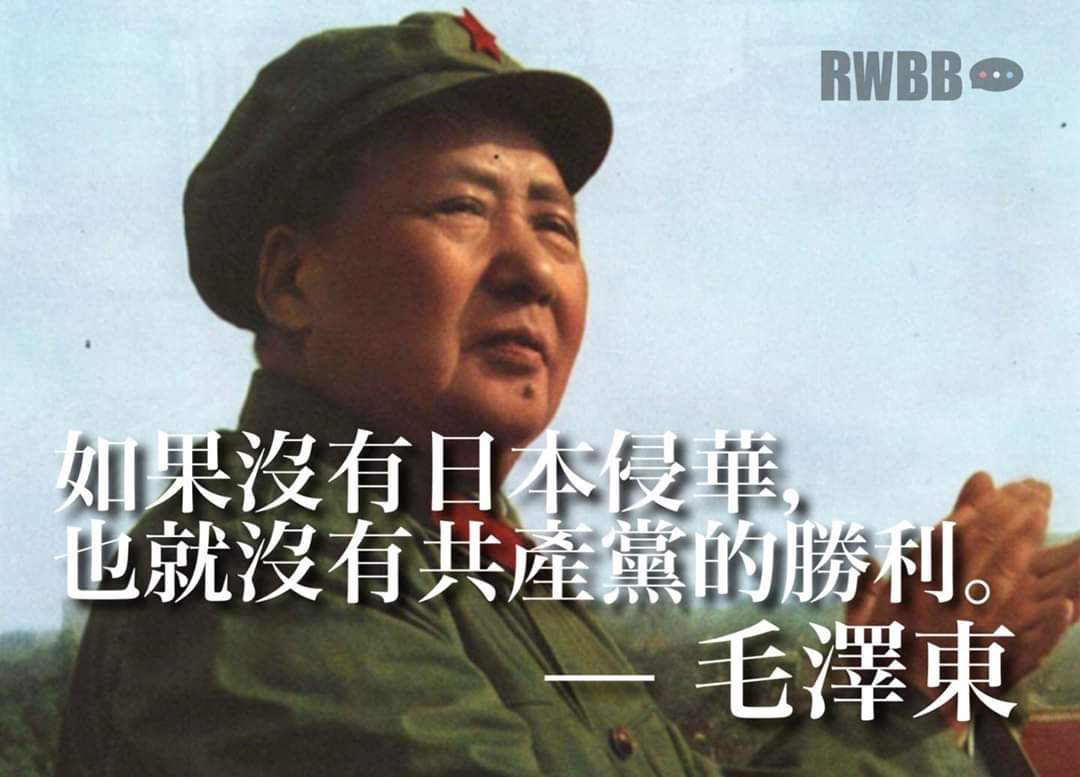
Records show that over the eight years from 1956 to 1964, Japanese visitors to China took the opportunity on seven occasions to offer verbal apologies directly to Mao Zedong — yet Mao was deeply moved, and in return, expressed profuse gratitude to the Japanese imperial army for invading China, saying it was precisely what allowed the CCP to grow strong and ultimately seize power.
By rights, it should be entirely unremarkable for a defeated aggressor to apologize to the victorious victim of its aggression — just as the Polish people took the "Warsaw Genuflection" in stride. So why did Mao Zedong do the exact opposite, showering the Japanese with gratitude for their apologies? The following will cite relevant historical records and facts to unravel this historical mystery.
Bombshell Revelations from Yenan Diary, the Nanjing Gazetteer, and Current Affairs Gazette
During the War of Resistance, Pyotr Vladimirov, the special envoy stationed in Yan'an by the Comintern — the CCP's direct superior at the time — wrote a book titled Yenan Diary during his years there. It contains the following entry:
"August 18, 1945: I happened to see a telegram from the New Fourth Army headquarters. This report from headquarters clearly and completely confirms that the CCP leadership and the supreme command of the Japanese expeditionary forces have long maintained contact. The telegram also undoubtedly shows that reports related to communications with the Japanese command are sent to Yan'an on a regular basis. I later confirmed that contact between CCP forces and Japanese military staff organs had been maintained for a long time. The two ends of this contact were Yan'an and Nanjing."
On another day, he further wrote: "We are discovering more and more that Yan'an is doing deals with the Japanese. Not only are they trading with the Japanese, but they are also in direct contact with Japanese military headquarters, sending their most capable cadres, such as Pan Hannian and Yang Fan, into the Japanese command to negotiate with the Japanese army, requesting a joint pincer attack with Japan against the Nationalists. They cannot wait any longer, and have finally gotten what they wanted from the Japanese — the Japanese handed over seven counties in northern Jiangsu to them, on the condition that they join forces to annihilate the Nationalist army."
The details of what Vladimirov referred to — "people like Yang Fan entering Japanese military headquarters to negotiate with the Japanese army" — are as follows:
The mainland-published Nanjing Gazetteer disclosed a scandal that had been sealed away for nearly half a century: that year, behind the back of the Nationalist government and behind the backs of the four hundred million compatriots fighting and bleeding in the war of resistance, the CCP negotiated peace terms with Japan's supreme military and political headquarters through secret channels. When this historical material came to light, it caused an uproar in academic circles.
The book reveals that in June 1945, a mysterious figure arrived at the headquarters of the Japanese China Expeditionary Army in Nanjing, introducing himself: "I am Yang Fan, liaison director of the New Fourth Army." Thus began a dark chapter in the history of the war of resistance.
The story unfolded like this: after the outbreak of the Pacific War, Japan found itself struggling with an overextended front. On the China battlefield, Nationalist forces continued to resist stubbornly. To salvage its increasingly passive position, Okamura Yasuji sent a peace overture to the New Fourth Army headquarters. Upon receiving it, the New Fourth Army sought instructions from the CCP Central Committee through the CCP's East China Bureau. Yan'an replied by secret telegram: "Secret contact with the Japanese side is permissible." The Japanese side then proposed that the CCP send a representative to negotiate with Japanese military headquarters. With approval relayed by telegram from the CCP Central Committee, New Fourth Army liaison director Yang Fan set off for Nanjing.
The day after arriving in Nanjing, Imai Takeo, deputy chief of staff of the Japanese China Expeditionary Army headquarters, began formal negotiations with Yang Fan, proposing a draft "local peace agreement." Besides both sides ceasing military operations, the Japanese side agreed to hand over seven counties, with the New Fourth Army maintaining neutrality and possibly cooperating with Japan in the future against both Chiang Kai-shek's Nationalist forces and British-American forces.
Historical records show that in March 1919, Lenin founded the "Comintern" in Soviet Russia; in 1920, the Comintern established a Far Eastern Bureau targeting China in particular; and a "China Section Plan" drafted by the Far Eastern Bureau in June 1921 shows that the Chinese Communist Party was in fact a "Far Eastern branch" operating under Comintern leadership.
The most fitting analogy for the relationship between the Comintern and the CCP is this: the Comintern was the headquarters based in Soviet Russia, and the CCP was its branch office in China; or, the Comintern was the police bureau, and the CCP its local police station. The CCP and the Comintern were, so to speak, "family" — wearing the same pair of pants, sitting on the same bench, breathing through the same nostril. The task the Comintern gave the CCP was, from the start, to overthrow the Nationalist government and establish a Soviet regime. Even so, Mao Zedong's criminal dealings with the Japanese imperial army apparently went too far even for his own "family" to stomach — even Vladimirov, the Comintern's own special envoy, could not bear to watch. In his diary, he angrily condemned:
"Mao Zedong retreats before the aggressor, yet profits for himself from the conflict between the central government and the Japanese army. At a time when the nation suffers calamity, when the people endure hardship and make incalculable sacrifices, when the country is at the mercy of fascists — to adopt such a strategy is nothing short of betrayal... What internationalist policy can one even discuss with Mao Zedong, when even his own people are merely tools in his power struggle! The bloodshed and suffering, the calamity and grief of millions, are to him nothing but an abstract concept."
Regarding the historical fact of Mao Zedong secretly colluding with the Japanese army, Yenan Diary is not the only piece of evidence. Related material recorded in Current Affairs Gazette corroborates the unimpeachable reliability of Yenan Diary, further cementing the fact that Mao Zedong and the CCP acted as collaborators.
On July 24, 1947, the second page of Ningbo's largest privately owned newspaper, Current Affairs Gazette, disclosed: "Evidence of Mao Zedong's treasonous collusion with the enemy during the war of resistance has been discovered — he signed a secret pact with Okamura Yasuji and had a photograph taken together... On August 7 of the 30th year of the Republic [1941], Mao Zedong traveled from Baode... to Shenchi in Shanxi, while at the same time Japanese General Okamura Yasuji traveled from Datong via Xiu County to the same location. The two sides concluded the following secret pact: 1. The Eighth Route Army and the Japanese army will join hands to jointly strike the Central [Nationalist] Army; 2. The Japanese side will present the Communist forces with ten small arms factories; 3. The Communist side will inform the Japanese side of the Central Army's operational plans. After signing the pact, Mao and Okamura had a photograph taken together to commemorate the occasion."
This historical account from Current Affairs Gazette shows that Mao Zedong was not only willing to play the collaborator, but even had a photograph taken to preserve the evidence, unafraid of people knowing he dared to be a traitor.
Xin Haonian and Li Rui Explain the Reasons in Detail
Having reviewed this condensed historical record, let us now turn to what researchers have revealed.
According to Xin Haonian, a renowned expert on the history of the war of resistance now living overseas, in his speech "Long Live the Victory of the Great Patriotic War," on August 25, 1937, the Communist Party did two things. First, it held the Luochuan Conference 50 kilometers east of Yan'an, where then-General Secretary Zhang Wentian delivered a report titled "Learning from Lenin." Why learn from Lenin? What secret formula did the CCP want to learn from its founding patriarch Lenin? It was specifically to learn how Lenin, during World War I, arranged for the Russian army to be defeated, allowing Russia to be beaten by Germany, so that Lenin could then reap the rewards. In other words, during this war of resistance, the CCP should not fight, and should instead let the Nationalist government in Nanjing be defeated by Japan. Then wouldn't the nation eventually belong to the CCP? And so the CCP settled on a strategy of letting "Japan and Chiang fight it out."
Li Rui, Mao Zedong's former secretary, published a memoir in 1999 recounting a speech Mao made at the 10th Plenum of the Eighth Party Congress. Mao said: "I told you back then (speaking to Liu Shaoqi and others) not to fight the Japanese — at first you didn't believe me, but wasn't my judgment right after all? After the war of resistance began, there were three forces in China — the Nationalists, the Communists, and the Japanese. What should the Communist Party do? The Communist Party should let the Nationalists and the Japanese fight each other! Once they've worn each other out, the country will naturally be ours!"
These remarks from Mao Zedong convince this writer that Yang Kaihui was not wrong when she called Mao Zedong "a rogue in life and a rogue in politics."
Mao Zedong's Repeated Expressions of Gratitude to the Japanese Invasion Forces
It is common and unremarkable, a matter of ordinary human decency, for a defeated aggressor to sincerely apologize to the victorious party it once invaded. But if the victorious victim instead turns around and thanks the defeated aggressor — repeatedly and profusely, no less — that would surely count as one of the most jaw-dropping oddities in the world. The originator of this oddity was none other than Mao Zedong. Search through world history, and this may well be a case of "one of a kind," as the Chinese saying about a scorpion's droppings goes.
According to a compilation by internet user "Corn Cob" on the Wanwei forum, Mao Zedong thanked Japanese fascists in person for invading China on at least seven occasions.
First: In 1956, former Japanese Lieutenant General Endo Saburo visited China and personally presented Mao with a Japanese military sword, expressing that Japanese soldiers would never again be China's enemy and sincerely apologizing for the past war. Mao told Endo: "You are also our teachers. We [the CCP] should thank you — it was precisely because you fought this war that the Chinese people were educated, and a China that was once a sheet of loose sand was united. So, we should thank you." Mao also gave Endo a painting by Qi Baishi as a return gift, personally inscribing it: "In gratitude for the precious gift bestowed by Mr. Endo Saburo, with nothing else to offer in return, I humbly present this painting by Qi Baishi."
Second: In 1956, Mao Zedong received a delegation led by Japanese capitalist Nagō Saburō. After solemnly apologizing for Japan's past invasion of China, Nagō added, "It would be nice if Japan could become a province of China in the future." Mao replied, "That's not how one should look at it. In the past, the Japanese invaders occupied more than half of China. If not for that sense of national crisis, the long-oppressed Chinese people might never have awakened, might never have united — and we [the CCP] might still be up in the mountains today, unable to come to Beijing to watch Peking opera."
Third: In 1960, when meeting Japanese leftist writer Noma Hiroshi and others, Mao said, "I've discussed this matter with many Japanese friends. Some of them say Japan's invasion of China was a bad thing. I say invasion is of course bad, but you can't look only at the bad side — on the other side, Japan did us [the CCP] a great favor. If Japan hadn't occupied more than half of China, the Chinese people would never have awakened. On this point, we should thank the Japanese imperial army."
Fourth: In 1961, in talks with Japanese Socialist Party lawmaker Kuroda Hisao, Mao said, "When Nagō Saburō met me, the first thing he said was: 'Japan invaded China, and we're sorry.' I told him: we don't see it that way — it was the Japanese warlords who occupied more than half of China, and in doing so, they educated the Chinese people; otherwise we [the CCP] would still be up in the mountains today, unable to come to Beijing to watch opera. So the Japanese warlords and monopoly capital actually did a good thing. If anyone should be thanked, I'd rather thank the Japanese warlords."
Fifth: In 1964, speaking with visiting delegates from Asia, Africa, and Oceania, Mao said, "There was a Japanese capitalist named Nagō Saburō who once spoke with me. He said: 'We're very sorry, Japan invaded you.' I said: 'No — if Japanese imperialism had not launched a large-scale invasion and occupied more than half of China, the whole Chinese people could never have united against imperialism, and the Chinese Communist Party could never have won.' In fact, Japanese imperialism was a good teacher for us [the CCP]. First, it weakened Chiang Kai-shek; second, it allowed us to expand our Communist-led base areas and army. Before the war of resistance, our army had reached 300,000, but due to our [the CCP's] own mistakes, it shrank to just over 20,000. During the eight years of the war of resistance, our army grew to 1.2 million. You see — didn't Japan do us a great favor? And this favor wasn't done by the Japanese Communist Party — it was done by Japanese militarism. Because the Japanese Communist Party didn't invade us; it was Japan's monopoly capital and its militarist government that invaded us."
Sixth: In 1964, Mao Zedong received Japanese Socialist Party figures Sasaki Kozo, Kuroda Hisao, and others. When the conversation turned to thanking Japan for invading China, Mao said, "We [the CCP] went from having no army at all to having an army of 300,000 — and then, because of my own mistakes, we lost all our base areas in the south and had to make the Long March of 25,000 li. Among those present here today are myself and Comrade Liao Chengzhi. How many troops were left afterward? From 300,000 down to just 25,000. Why should we [the CCP] thank the Japanese imperial army? Because it was only when the Japanese imperial army came that we fought against it, and were then able to cooperate again with Chiang Kai-shek. With 25,000 troops, we fought for eight years, and grew again to 1.2 million troops, with base areas covering a population of 100 million. Wouldn't you say we owe them thanks?"
Seventh: In 1970, speaking with Edgar Snow, Mao said, "Those Japanese were really good to us — the Chinese revolution could not have succeeded without Japanese help. I said this to a Japanese man once, a capitalist named Nagō Saburō. He kept saying: 'I'm sorry, we invaded you.' I said: 'No, you did us a great favor — Japanese militarism and the Japanese emperor. You occupied more than half of China, and the Chinese people all rose up to fight you, and we built an army of a million men and controlled territory with a population of 100 million — wasn't all that thanks to your help?'"
Conclusion
Without the historical sources cited in this article laying the groundwork, if we were to suddenly read of Mao Zedong's profuse gratitude toward the Japanese imperial army, we might find it utterly bewildering and inexplicable. But having reviewed the historical record and facts, we finally understand — Mao Zedong's words were, in fact, a heartfelt confession from the depths of his soul.
Mao Zedong told the Japanese that without the Japanese imperial army's invasion of China, the CCP could not have "built an army of a million," could not have "weakened Chiang Kai-shek," and could not have "come to Beijing to watch Peking opera" — these are things Mao was willing to say out loud. What Mao left unsaid was probably this: "Without the Japanese imperial army's invasion of China, I, a mountain bandit from Jinggangshan, could never have become the uncrowned emperor of China!"
In 1956, the first Japanese person to receive Mao Zedong's thanks was Endo Saburo. Who was Endo Saburo? He was a lieutenant general in the invading Japanese army. It is believed that he was the one who carried out the "decapitation" bombing raids targeting Chiang Kai-shek, then leading the nationwide resistance from Chongqing. And the person who supplied Endo Saburo with intelligence on Chiang Kai-shek's whereabouts was none other than the CCP's "mole," Mao Zedong.
Over the eight years from 1956 to 1964, Mao Zedong thanked the Japanese in person seven times — thanking them anew at every meeting. Had Mao been able to meet with Japanese visitors a thousand times over, his profuse gratitude to the Japanese could have filled an entire tome: The Quotations of Mao Zedong Thanking the Japanese Imperial Army.
Should such a monumental work ever actually be published, we might venture a bold vision for the CCP's September 3rd military parade formation: at the very front of the procession, a red flag sedan leads the way, with the Japanese military sword that Endo Saburo gave to Mao mounted upright on its hood, point up; atop the trunk, a specially bound hardcover edition of The Quotations of Mao Zedong Thanking the Japanese Imperial Army is displayed; and the car's loudspeakers repeatedly broadcast those very quotations of Mao thanking the Japanese imperial army.
Now that — that spectacle, that display — might just be the most jarring, most eye-opening "commemoration" of the CCP's dark wartime history, the most attention-grabbing way to truly "carry it forward."
2025-08-29