Latin America, broadly speaking, includes all countries and territories in the Americas south of the United States. In recent years, in its contest with the United States over influence in Latin America, the Chinese Communist Party (CCP) has suffered one major setback after another, and its influence in the region is being steadily eroded. Here, I want to focus on four major setbacks the CCP has suffered in Latin America.
I. The CCP's setback in Panama
On February 23, the Panamanian government officially announced the Supreme Court's ruling to revoke the concession held by a subsidiary of Hong Kong-based CK Hutchison over two strategically important ports on the Panama Canal. This marked a major setback for the CCP in its contest with the United States over Panama.
Panama's most important strategic asset is the Panama Canal. As a vital chokepoint linking the Pacific and Atlantic Oceans, the canal is one of the world's most important shipping routes, of enormous value to global geopolitics and military logistics.
The Panama Canal was originally built by the United States, but sovereignty was transferred to the Panamanian government in 1999 under a bilateral treaty. Today, the United States and China are the two countries that use the canal most frequently. The U.S. accounts for roughly 40% of the canal's total annual traffic, while China accounts for 21.4%. Nearly 5% of the world's seaborne cargo passes through it.
On the Pacific side of the canal lies the port of Balboa; on the Atlantic side lies the port of Cristobal. In 1997, Panama Ports Company, a subsidiary of Hong Kong tycoon Li Ka-shing's CK Hutchison, obtained concession rights to operate both ports. In 2021, the concession was extended for another 25 years.
After Donald Trump was sworn in again as U.S. president in January 2025, he immediately took action against the potential threat the CCP's control of the Panama Canal could pose to U.S. national security. Secretary of State Marco Rubio's first overseas trip after taking office was to Panama; Defense Secretary Pete Hegseth soon followed with his own visit.
Under strong pressure from the U.S. president, secretary of state, and defense secretary, Panama's president pledged to work closely with the United States and not renew the "Belt and Road" agreement with the CCP. Relations between Panama and the United States continued to warm, while relations with the CCP cooled sharply.
As the U.S. and China fought fiercely over Panama, Hong Kong's Li Ka-shing grew uneasy and decided to quickly unload the two Panamanian ports.
On March 4, 2025, CK Hutchison announced that it had reached an "agreement in principle" with a consortium formed by U.S. investment firm BlackRock and TiL, to sell 80% of the equity in the 43 ports it holds across 23 countries worldwide, along with 90% of the equity in the two Panama ports, to the consortium, in a deal worth a total of $22.8 billion.
But the CCP would not stand for it, and moved on four fronts at once: first, it fired up its propaganda machine to attack Li Ka-shing; second, it launched an antitrust investigation into his companies; third, it ordered Chinese state-owned enterprises to suspend contract renewals with his companies; and fourth, it demanded that Chinese state-owned enterprises join the bid for the two ports and secure a majority stake.
This CCP interference scuttled Li Ka-shing's deal.
The Panamanian government then simply cut the ground out from under him: its Supreme Court ruled that the concession held by Li Ka-shing's Panama Ports Company was unconstitutional. Not only did Li Ka-shing fail to get a good price for the sale, he ended up with nothing at all.
CK Hutchison has confirmed that on February 23, Panamanian authorities forcibly entered the two strategic ports at either end of the canal under its operation and took over administrative and operational control of the terminals.
The CCP's scheme to pressure Li Ka-shing in order to gain control over the two strategic ports at either end of the Panama Canal has, in effect, failed. This is without doubt a major setback for the CCP.
II. The CCP's setback in Venezuela
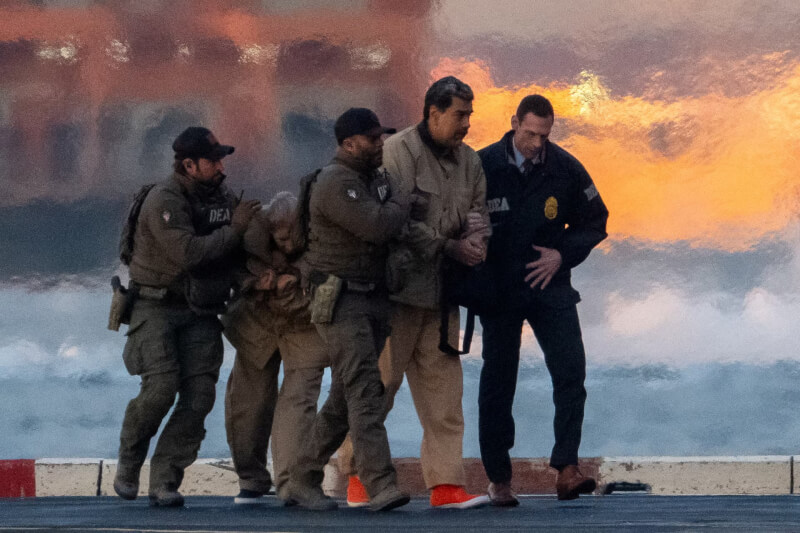
On January 3, U.S. special forces captured Venezuelan President Nicolás Maduro like a hawk snatching a chick — the year's first blockbuster headline as 2026 began.
The capture and trial of Maduro, the CCP's old friend and Venezuela's dictator, marks yet another major setback for the CCP in Latin America.
Ever since the anti-American socialist Hugo Chávez was elected president of Venezuela in 1998, relations between Venezuela and China entered a honeymoon period. Since 1999, Chávez visited China six times — more than any other Latin American leader. Three successive CCP leaders — Jiang Zemin, Hu Jintao, and Xi Jinping — all met with Chávez.
After Chávez died in 2013, his successor Maduro continued his policies. During Maduro's 2023 visit to Beijing, the bilateral relationship was upgraded to an "all-weather strategic partnership."
For years, the CCP treated Venezuela as its beachhead for advancing into the Western Hemisphere. To the CCP, Venezuela's importance lay chiefly in five things: it was Latin America's most important anti-American partner; an important source of cheap oil; a dumping ground for Chinese goods; a buyer of CCP weapons and equipment; and an important base for infiltrating Latin America.
According to mainland Chinese media reports, the CCP has invested a cumulative total of more than $130 billion in Venezuela; as of the end of 2025, Venezuela still owed China between $10 billion and $20 billion in loans; combined, the investment and loans total roughly $150 billion.
The CCP had staked its bets on its "good friend" Maduro. Just hours before U.S. forces "invited" Maduro to the United States, the CCP still sent special envoy Qiu Xiaoqi, leading a delegation, to call on Maduro at Miraflores Palace. The two sides exchanged gifts and held talks lasting three hours.
A press release from the Venezuelan presidential office said the meeting "reviewed the more than 600 agreements the two sides have signed, marking the launch of a high-level diplomatic agenda for 2026."
Maduro's capture and Venezuela's regime change dealt a heavy blow to the CCP. The CCP has lost one of its most important strategic footholds in Latin America; its days of importing cheap oil from Venezuela are gone forever; much of its lending and investment in Venezuela may well be written off; and CCP weapons and equipment played no role whatsoever in stopping the U.S. military operation that captured Maduro, exposing the weaknesses of Chinese arms to the entire world.
Maduro's fall has laid bare, in broad daylight, the CCP's intelligence failures, strategic miscalculations, policy errors, unreliable political commitments, and ideological absurdity.
III. The CCP's setback in Peru
On February 17, Peru's Congress voted 75 in favor, 24 against, and 3 abstentions to impeach interim President José Jerí.
Jerí was removed from office after becoming embroiled in a scandal local media dubbed "Chinese-Restaurant-Gate." Jerí was photographed meeting privately, on multiple occasions, with Chinese businessman Yang Zhihua — a violation of Peruvian law requiring the president's schedule to be transparent and public. At least three videos were leaked to the media.
After the first video surfaced, Jerí publicly apologized, claiming his visits to the Chinese restaurant were meant to coordinate an anniversary event marking friendly relations between Peru and China, and denied receiving any "improper" meeting requests. But this explanation was far-fetched. An anniversary event at the government level requires no secrecy, and should properly be coordinated through diplomatic channels and the Chinese embassy — not through the president personally visiting a Chinese restaurant at night to meet with its owner.
Why did Peruvian President Jerí hold secret meetings with Chinese businessman Yang Zhihua? The most likely explanation is that Yang was acting as a CCP proxy, colluding covertly with the Peruvian president.
The CCP frequently uses Chinese businessmen to build close ties with foreign political figures in order to expand its influence — a tactic it commonly employs in overseas infiltration. Yang Zhihua was very likely a Chinese businessman being used by the CCP for this purpose.
Politically, Peru has traditionally been pro-American, but over the past two decades or so, as the CCP has increasingly lured it with economic incentives, it has tilted more and more toward Beijing. In 2008, China and Peru established a strategic partnership; in 2013, the relationship was upgraded to a comprehensive strategic partnership. China is Peru's largest trading partner and export market, with cooperation spanning infrastructure, energy, mining, and new-energy vehicles.
The CCP is working hard to put down roots in Latin America, while the United States is trying to drive its influence out. The tug-of-war between the U.S. and China over Peru has continued without letup.
President Trump has notified Congress of his intention to designate Peru a "major non-NATO ally." Peru has proposed purchasing $1.5 billion worth of American equipment and services to build a new naval base near Lima. Last December, the U.S. Senate confirmed Trump's nominee Bernie Navarro as the new ambassador to Peru. Navarro has vowed to "root out" the CCP's expanding influence.
Today in Peru, many political figures favor developing more traditional ties with the United States — leveraging American strength to grow Peru's economy and boost its defense capabilities — rather than relying on the CCP, which is prone to political pressure, economic coercion, and cultural infiltration.
The impeachment of Peruvian President Jerí is very likely a result of the geopolitical rivalry between the U.S. and China.
IV. The CCP's setback in Ecuador
On July 30 of last year, Overseas Chinese Homeland Network published an article titled "Ecuadorian Hydropower Station Suffers Major Structural Defects; China's Power Construction Corporation to Pay $400 Million in Compensation." The article stated that the CCP state-owned enterprise PowerChina would pay the Ecuadorian government $400 million in compensation for national losses caused by defects in the Coca Codo Sinclair hydroelectric project.
Ecuador's Minister of Economy and Finance, in a local radio interview, said the compensation agreement was an important achievement of Ecuador's negotiations with China. She said: "We made clear to the Chinese side that the Coca Codo project caused not only losses at the corporate level, but also a loss of revenue for the national treasury, so we would not accept compensation merely in the form of a guarantee — we demanded direct compensation to the state. We succeeded in securing that."
The Coca Codo Sinclair hydroelectric project in Ecuador is a key Belt and Road project undertaken by the CCP in Latin America.
On November 18, 2016, Xi Jinping personally traveled to Ecuador to attend the launch ceremony for the plant's power generation — a clear sign of how much importance Xi attached to the project.
But not long after the plant was completed, serious quality problems emerged. In December 2018, media reports said "7,648 cracks had appeared in the dam's machinery."
In 2021, the Ecuadorian government filed for arbitration with the International Chamber of Commerce's arbitration court, demanding $580 million in compensation from PowerChina.
In 2023, The Wall Street Journal published an article using the Coca Codo Sinclair case to expose quality problems, debt traps, and corruption in the CCP's Belt and Road projects. Xinhua immediately struck back, calling it disinformation. In 2024, PowerChina filed a countersuit accusing Ecuador of breach of contract.
In the end, however, the result was this: the CCP state-owned enterprise PowerChina paid the Ecuadorian government $400 million in compensation.
This is a successful case of a foreign government obtaining compensation from a CCP state-owned enterprise for quality problems in a Belt and Road project — opening the door for other countries harmed by Belt and Road projects to seek compensation from CCP state enterprises, with consequences that are impossible to predict.
Conclusion
Driven by the strong push of U.S. President Trump, historic upheavals are underway across Latin America. Beyond the four events described above, conservative candidates have won presidential elections in Argentina, Bolivia, Honduras, Chile, and Costa Rica. Under America's "maximum pressure," Cuba too may soon undergo regime change.
As President Trump's new Monroe Doctrine — the "Trump Doctrine" — takes effect, and as the CCP suffers one setback after another in its domestic and foreign policy decisions, its influence in Latin America is bound to be severely diminished.