
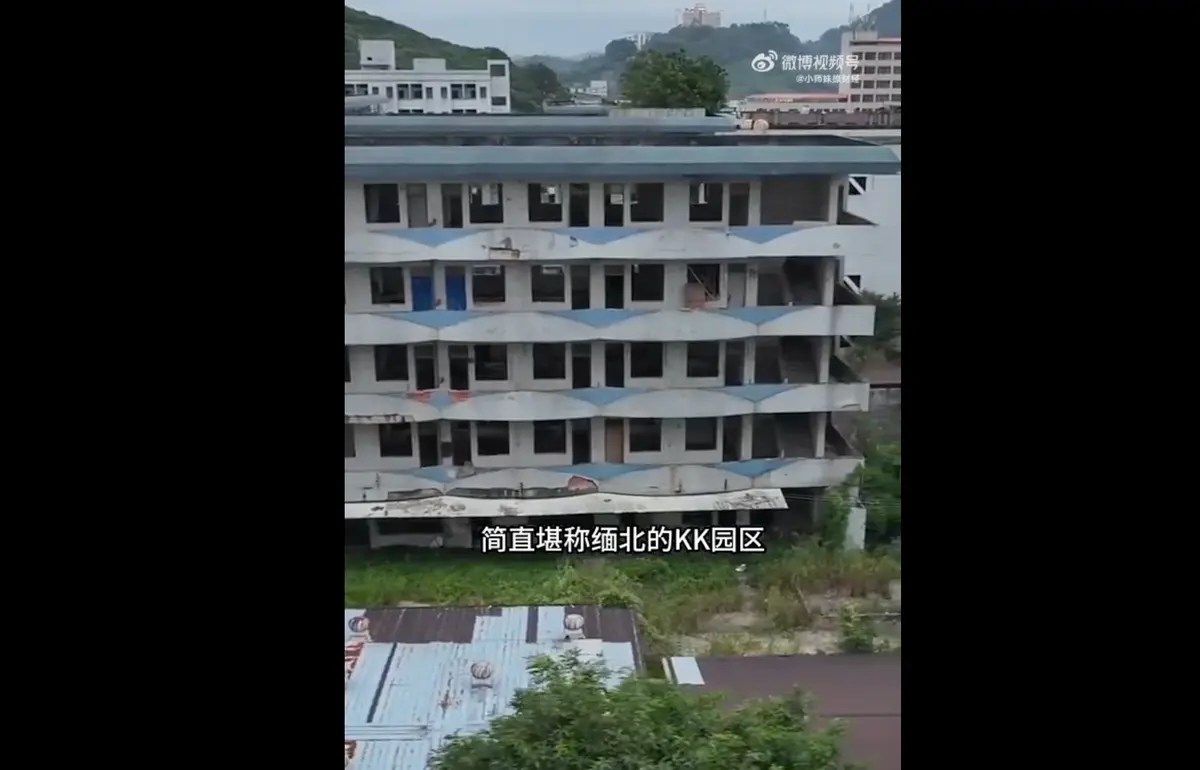
Recently, many mainland Chinese internet users have been focused on the topics of missing persons and forced organ harvesting. One blogger revisited the CCP's notorious "custody and repatriation" system, alleging that at least several thousand people died or went missing at the Zhangmutou detention center in Dongguan, Guangdong. After the topic surged to the top of trending searches, it was suppressed. One internet user said it felt even more vicious than the so-called scam compounds in northern Myanmar.
Blogger Exposes History of Atrocities at Dongguan's Zhangmutou Detention Center; Trending Topic Suppressed
On April 8, a Chinese blogger posted a video calling for a thorough investigation into the whereabouts of people who went missing at the Zhangmutou detention center. The blogger estimated that, over the 11 years from 1992 to 2003, the total number of deaths and disappearances at the center was at least in the thousands.
In the video, the blogger said that over those 11 years, Zhangmutou took in a cumulative total of 830,000 person-instances of detention, yet official records contain no dedicated statistics on missing persons, and have never released aggregate figures for unnatural deaths, escapes and disappearances, human trafficking, wrongful deportation, or unknown whereabouts. Officials acknowledge only isolated incidents — what is publicly available consists solely of scattered individual cases and isolated egregious incidents, with no systematic data.
The blogger noted that, based on conservative estimates drawn from historical context and proportional reasoning, at least 800 to 4,000 people died from abuse, starvation, illness, or beatings over those 11 years. As for others who went missing or whose whereabouts remain unknown — including those who escaped, were trafficked, wrongfully deported, or ended up as unidentified corpses — between 2,500 and 8,000 people vanished permanently. The public consensus, therefore, is that the combined total of unnatural deaths and disappearances reaches at least the thousands.
The blogger argued that the root cause of this atrocity was systemic. The detention centers operated under complete black-box management: no registration, no surveillance, no right for family members to be informed, internal chaos, incomplete records, arbitrary destruction of files, and registration under false names. After someone was seized, it was extremely difficult for family members to trace them; once a person was gone, the standard line was "already repatriated." Deaths from beatings, illness, or starvation inside the centers were routine, with no notification to family — bodies were simply cremated and buried on barren hillsides. Many others went missing while trying to escape — climbing over walls, jumping from moving vehicles, fleeing into the mountains — dying in the wilderness, unclaimed by anyone.
In addition, the detention centers extorted ransom payments from family members; if a family could not afford to pay, the detainee would be forcibly deported, often without any identity verification during the process, leading to large numbers of people being sent to the wrong place, left out entirely, or deliberately dropped off midway — resulting in mass permanent disappearances.
The large-scale disappearances were also tied to human trafficking, particularly of women, who were directly sold, forced into prostitution, or sold off to remote regions. Entire groups of migrant female workers went missing in the area at the time. Among migrant workers back then, the common understanding was that "pretty female workers at Zhangmutou are the ones most likely to disappear" — their fates included being trafficked, forced into prostitution, resold into forced labor, abused to death, losing contact after wrongful deportation, or dying after attempting to escape.
The blogger concluded: "Today's verdict: the missing persons of the Zhangmutou detention center are a hopeless, dead, covered-up account that will never be settled."
The video sparked massive reposting and response from mainland internet users, with many leaving comments recalling the horrors of the detention centers at the time: "My first love went to Guangdong in 1994 and was never heard from again; his mother couldn't bear it and died of grief within three years"; "In 2004, in Chang'an, Dongguan, you could see corpses in the grass at any time"; "A million migrant workers went down to Guangdong, and every village had someone who never came home."
The topic briefly surged to the top of trending searches on Chinese social media, but was quickly suppressed. One blogger posted a video asking, "What happened that made Zhangmutou trend?", and users continued commenting heatedly, revisiting the crimes of the custody-and-repatriation system.
By April 10, only scattered comments on the topic remained on Weibo.
One internet user reposted a screenshot in which a person who had once been detained at the Zhangmutou center revealed that when young women were brought in, the staff would rape them, and then have the cellblock head order gang rapes in turns; the person said they personally witnessed many girls being beaten to death.
In recent years, scam compounds in places like northern Myanmar in Southeast Asia have been exposed for involvement in human trafficking, forced labor, violent torture, illegal detention, rape, and even forced organ harvesting. Some internet users pointed out bluntly: "Today's northern Myanmar is yesterday's Zhangmutou" and "The prototype for the compounds of northern Myanmar was actually in Guangdong." Others said it felt even more vicious than the so-called compounds of northern Myanmar.
The custody-and-repatriation system operated in China for many years. The tragedy at Zhangmutou is only the tip of the iceberg of the crimes committed under the CCP's detention system.
In March 2003, Sun Zhigang, a 27-year-old university graduate from Hubei who had graduated barely a year earlier, was detained by Guangzhou authorities on the grounds of being a person with "no ID, no fixed residence, no employment," and was beaten to death by staff at the detention center within just three days. Officials insisted he had died "of illness." Under public pressure, the CCP authorities abolished the custody-and-repatriation system that same year. But similar facilities have continued to exist in altered forms — in recent years, Falun Gong practitioners and petitioners have frequently been held in so-called "black jails."