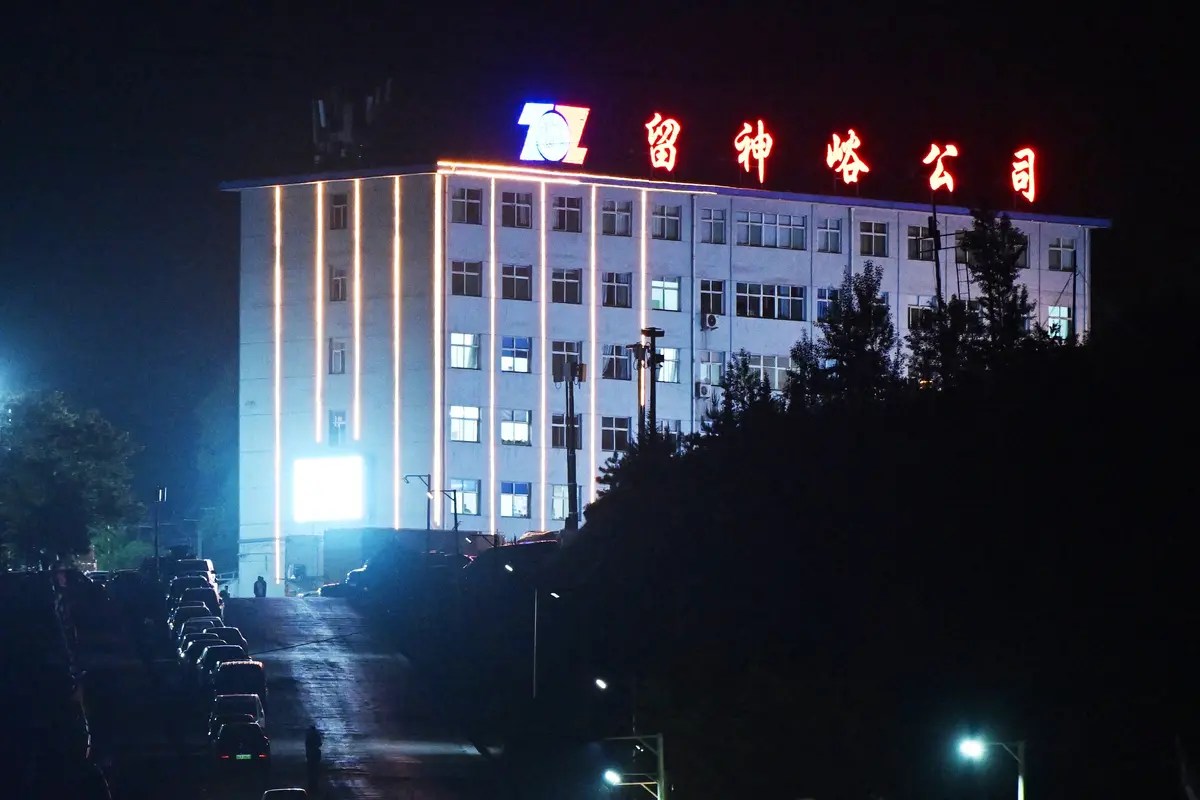
A major gas explosion occurred at the Liuxinyu coal mine, operated by the Tongzhou Coal Industry Group in Qinyuan County, Changzhi City, Shanxi Province, on the evening of May 22, local time. At the time of the explosion, 247 workers were on shift underground, but information for more than a hundred of them could not be found in the system. Officials initially reported that the accident had killed at least 90 people, but later revised the toll down to 82. The systemic cover-up surrounding this mine disaster has drawn wide attention.
Liuxinyu Mine Gas Explosion: Shifting Death Toll Draws Questions
According to a compilation of mainland Chinese media reports, after the accident occurred on the evening of May 22, Changzhi city officials in Shanxi reported by the morning of May 23 that 8 people had died and only 38 remained trapped underground. Around noon that day, the reported death toll began rapidly climbing — within just two hours it rose from the initial 8 to over 50, and by 2 p.m. on the 23rd, state broadcaster CCTV, citing official information, reported that the accident had killed 90 people.
But at a press conference held around 10:30 p.m. on the 23rd, Changzhi officials said the accident had left 82 dead, 2 missing, and 128 injured. Officials claimed the scene had been chaotic and that the company had failed to keep an accurate count of workers on shift, which they said accounted for the initially inaccurate figures.
As of the morning of the 25th, official information still put the death toll at 82, with 2 still missing, and rescue teams continuing their search efforts.
Earlier, mainland media reported that a reporter at the mine explosion site saw a posted sign showing that 124 workers had entered the mine at the time of the accident. But after cross-checking through multiple sources, it was found that the actual number of workers underground was 247, meaning valid information for 123 of them could not be found in the system.
The officially reported casualty figures have been widely suspected of being underreported. Mainland media reports note that miners are supposed to undergo facial recognition and register through security gates and personnel location cards before entering the mine — leading internet users to ask: if entry registration procedures were so strict, why did the numbers not add up?
In addition, mainland media reported that the explosion occurred 300 meters underground. Rescuers discovered two hidden tunnels, each roughly a kilometer long, while the mine's own blueprints did not match the actual layout underground, forcing rescuers to search tunnel by tunnel. The mine operator has been criticized for using "double-set blueprints" to conduct illegal mining; the lack of personnel-tracking systems and accurate maps became the biggest obstacle to rescue efforts, and the two kilometer-long hidden tunnels have yet to be fully searched, raising the possibility that missing miners remain inside.
The Disaster Exposes Long-Standing Problems in Official Safety Oversight
According to public records, the Shanxi Tongzhou Coal and Coke Group is a private enterprise in Qinyuan County, Shanxi, engaged in coal mining, coal washing, coking, and chemical byproduct recovery. Founded in 1983, it has total assets of 950 million yuan and more than 3,000 employees. The group operates several coal mines, its primary product being No. 2 main coking coal, extracted through inclined-shaft mining and mechanized coal-cutting techniques, with an annual production capacity of 700,000 tonnes.
According to mainland media reports, a document issued on November 14, 2023 by the Shanxi Provincial Emergency Management Department and the Shanxi Provincial Local Coal Mine Safety Supervision Bureau shows that the Liuxinyu coal mine, operated by the Shanxi Tongzhou Group, had been certified as meeting Level-2 standards under the safety production standardization management system, with the certification valid for three years from the date of confirmation.
The Liuxinyu mine is classified as a high-gas mine, and was placed on the national list of coal mines with severe hazard risks in 2024. Yet despite having been penalized twice in 2025, the mine still carried its Level-2 "safety production standardization" certification right up until this accident occurred.
In September 2025, Shanxi's Department of Natural Resources published its 2025 list of Green Mines, and the Liuxinyu coal mine, operated by the Shanxi Tongzhou Group, was also included on that list after passing the selection process.
On May 23, the mayor of Changzhi, Shanxi held a press conference on the Liuxinyu gas explosion, stating that preliminary findings indicated the mining company involved had committed major violations of the law. Internet users responded: "Where were you before this happened? Why wasn't this dealt with sooner?"
The Mine Disaster Is Being Linked to the Cost of a Political Mandate
The Liuxinyu mine, located in Shanxi's coal-producing belt, primarily produces coking coal. As a mid-sized enterprise, its output accounts for only a small share of the region's total annual production.
Earlier this year, China's coal supply could even be described as exceeding demand. But as the Iran war pushed up liquefied natural gas (LNG) prices and reduced imports, coal has come under renewed pressure, forced to continue shouldering the bulk of the nation's thermal power generation.
A Bloomberg report on May 24 noted that China's ample coal stockpiles had helped cushion the impact of the Iran war, but that this mine disaster has now raised outside questions about the hidden costs behind that resilience.
In the aftermath of the Shanxi mine disaster, leading officials across multiple regions of China went underground to oversee safety production. But Bloomberg's report argues that Beijing has not addressed the underlying structural problems, including distorted incentive structures: after accidents, officials focus their response on preventing further incidents rather than curbing overall output, and when problems occur, punishment typically falls only on local officials rather than the central government. When production is treated as the top priority, local governments can find themselves caught between Beijing's economic directives and its safety standards.
A System of Collusion Between Officials and Business, and "Passing the Buck" When Disaster Strikes
It is reported that following the Liuxinyu mine accident, those in charge of the mining company involved have already been placed under coercive measures, and the CCP's State Council has established an accident investigation team.
But for years, critics have repeatedly pointed out that mine disasters in China involve collusion between officials and business, along with systemic corruption — officials holding shares in mining companies, taking bribes, and local governments, in pursuit of GDP growth and fiscal revenue, loosening oversight and shielding illegal production. And whenever accidents occur, there is often a pattern of concealment and delayed reporting, lenient punishment, or the use of scapegoats.
Historically, senior CCP officials have rarely been held accountable after mine disasters in China.
Li Linyi, a China affairs analyst familiar with the inner workings of the CCP system, said that China's recurring mine disasters and other major accidents do indeed have systemic roots. First, enterprises are controlled by the Party, and everything they do is oriented toward the CCP's political needs, prioritizing formality and performance over genuinely valuing workers' lives — leaving many safety systems as mere window dressing. Second, whenever an accident occurs, officials at every level try to cover up and conceal the facts, avoiding implicating senior officials as much as possible — which keeps the cost of official dereliction of duty extremely low, partly because these officials are not democratically elected.
Li Linyi cited the example of Fei Gaoyun, a member of the Anhui Provincial Party Standing Committee and Party secretary of Hefei, who was officially announced as having fallen from power on May 6. While Fei was serving as vice governor of Jiangsu Province, the March 21, 2019 explosion at the Xiangshui Tianjiayi Chemical Plant in Jiangsu — a major, catastrophic accident — resulted in Fei receiving only an administrative demerit. He was later promoted to Standing Committee member of the Jiangsu Provincial Party Committee and head of its Political and Legal Affairs Commission, then Standing Committee member and executive vice governor of Jiangsu, before being transferred to Anhui as Standing Committee member and executive vice governor there — continuing to be entrusted with greater responsibility all along.
Li Linyi said that, in reality, under CCP rule, many of China's various accidents have been found to stem from human error and mismanagement, yet officials cover them up. And precisely because they fear being held accountable, whenever disasters — natural or man-made — occur, CCP leadership consistently emphasizes "stability maintenance" above all else, rather than genuinely prioritizing human life.