
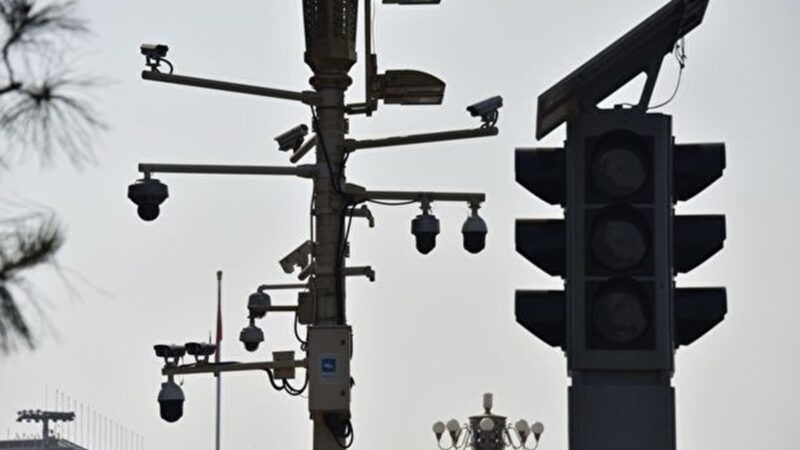



In recent years, the CCP's Ministry of State Security has aggressively publicized its "spy-catching" efforts — everything from mobile phone apps to research papers, from weather data to rare animals and plants, to celebrity fandom, job hunting, studying abroad, and even "lying flat," has been branded as connected to "hostile foreign forces." Virtually every domain an ordinary person might come into contact with has now been framed as a matter of "national security," drawing widespread mockery online.
Ever since Chen Yixin took over as the CCP's Minister of State Security in March 2023, the Ministry of State Security has moved from operating in the shadows to stepping into the spotlight, launching an official WeChat public account called "Ministry of State Security" and publishing articles frequently, dramatically expanding the definition of "hostile foreign forces."
On June 23, China Digital Times published an article titled "Where Are the Hostile Foreign Forces: A List of Ministry of State Security Public Account Posts." The article compiled the Ministry of State Security's posts on "hostile foreign forces" over the past three years and found that the so-called "tentacles" of "foreign spies" now reach into at least five broad categories and more than thirty specific scenarios: intelligence-gathering through pop-up ads on phones, eavesdropping via Bluetooth earphones and smart devices, photography at exhibition halls and similar venues, "spies" in comment sections, spreading messages via AirDrop, circumventing the firewall to repost overseas videos, public-opinion manipulation, AI/deepfakes — and even celebrity fandom, matchmaking, job hunting, and studying abroad.
Heading into 2026, "espionage-related" topics have expanded further still, to include "photovoltaics/new energy," "the recruitment of researchers as foreign agents," "surveying/mapping and geographic information," the use of "spy turtles and spy fish to steal sensitive ocean data," the "illegal collection of rare species," and the recently controversial topic of "brainwashing behind the 'lying flat' trend."
The article states: "There seem to be almost no things an ordinary person encounters in a single day that are actually safe."
The article describes feeding all of this content to an AI and posing the question: "If a person wanted to completely avoid all 'hostile foreign forces' and become an impeccably good citizen, what would he or she have to look like?"
The AI responded that "this model citizen would have no cellphone, because a cellphone has pop-up ads, apps, Bluetooth, and AirDrop. He wouldn't take photos, especially not at exhibition halls, science museums, or on the street, because the line between a camera and mapping/surveying is razor-thin, and geotagging photos is a direct pipeline to being an accomplice."
"He wouldn't research photovoltaics, wouldn't write papers, and wouldn't touch cutting-edge fields like new energy, surveying, meteorology, oceanography, or biological species. He wouldn't keep turtles or fish, wary that they might actually be spy turtles or spy fish. He wouldn't grow flowers or collect seeds, to avoid plundering biological resources. He..."
When asked whether such a person actually exists in reality, the AI did not answer. But it added: "It's also recommended that this citizen not use AI, since generative artificial intelligence has already been placed by the Ministry of State Security on the list of things that could potentially be exploited by hostile foreign forces."
Internet users commented: "What a joke! By this standard, every single person in China is a 'spy' — no one is exempt."
Earlier analysis suggested that the CCP's Ministry of State Security's sudden leap from operating covertly to stepping into the spotlight — actively inserting itself into the economy, finance, scientific research, and other fields — may reflect the state security minister's eagerness to curry favor with CCP leadership and to compete for resources against the Ministry of Public Security. But because the cases it fabricates are so absurd, they often draw nothing but ridicule from internet users.