Another Side of the Cultural Revolution: Mao Zedong's Protracted Struggle with the Party-Government-Military Bureaucracy
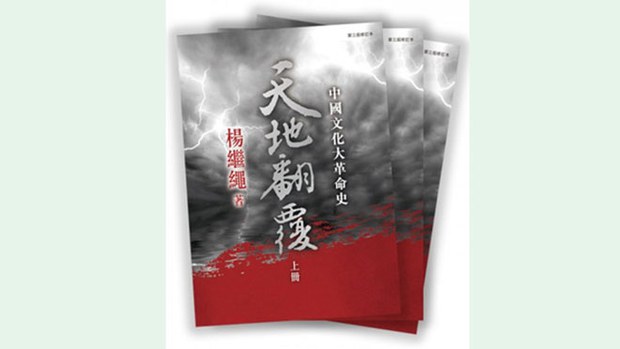
More than thirty years after Yan Jiaqi and Gao Gao published their pioneering history A Ten-Year History of the Cultural Revolution, veteran journalist and historian Yang Jisheng has released his massive three-volume work Heaven and Earth Turned Upside Down: A History of China's Cultural Revolution, a fitting companion to his monumental study of the Great Famine, Tombstone. This book presents a panoramic picture of the Cultural Revolution as sweeping as the scroll painting Along the River During the Qingming Festival, while also offering fresh analysis of a number of key events within it — a work that can fairly be called the definitive synthesis of Cultural Revolution history to date.
The Tang dynasty historian Liu Zhiji held that a historian must possess three essential qualities — talent, learning, and insight — while the Qing dynasty scholar Zhang Xuecheng added a fourth: 'historical virtue,' a requirement of the historian's own character, morality, and cultivation, described as 'the inner disposition of the one who writes history.' 'Historical virtue' is in turn inseparable from 'historical courage.' Liu Xie wrote in The Literary Mind and the Carving of Dragons: 'The historian's task is to encompass an entire era, to bear responsibility to the whole realm, and to render judgment on right and wrong — no burden borne with pen in hand is heavier than this.' Li Zhi went further, holding that 'historical courage' occupies the most crucial place among a historian's virtues: 'Talent alone, without courage, leaves one too timid to act.' A historian must 'praise what is good and condemn what is evil, exalt the righteous and despise the wicked' — even at the cost of one's own freedom or life. Throughout history, both in China and abroad, there is no shortage of cases where dictators slaughtered historians, yet successive generations of historians still carried on, recording events with an unflinching pen. In an era when China is moving wholesale back toward the ways of the Cultural Revolution, an age of Xi Jinping in which 'ten thousand horses stand mute' — a truly lamentable state of affairs — Yang Jisheng possesses all five virtues at once: historical talent, learning, insight, virtue, and courage. His writing on the Cultural Revolution is at once a history of the past and a pointed critique of the present: '[The CCP authorities], while formally repudiating the Cultural Revolution, have inherited its political system and ideology in full. The ideology remains the same — Marxism-Leninism-Mao Zedong Thought; the political system remains the same as before the Cultural Revolution — one-party dictatorship, extreme centralization of power, power above all else. It is precisely this political legacy of Mao's that allowed the bureaucratic class of the Mao era — together with their descendants, relatives, and associates — to become the new privileged elite during the reform-and-opening era.' Living in an unfree China, Yang Jisheng, like Liu Xiaobo, has managed to 'think and write freely, as if living in a free country.'
One driving force behind the Cultural Revolution was a power struggle at the top of the CCP. After bringing on the catastrophe of the Great Famine, Mao was forced to retreat to the 'second line,' leaving Liu Shaoqi and Deng Xiaoping to handle day-to-day governance on the 'first line.' Feeling that real power had slipped from his grasp, Mao bitterly complained that Liu and Deng were 'defecating on top of his head,' and resolved to seize back supreme control through the extraordinary means of the Cultural Revolution. Yet Yang Jisheng also points out that the Cultural Revolution was not simply a power struggle. Had Mao merely wanted to remove Liu, Deng, and others, he could have used the same methods he had used earlier against Gao Gang, Peng Dehuai, and their supporters — resolving the matter through a 'line struggle' that would have shifted power only at the top, with little impact on society below. The deeper reason Mao instead launched the bone-and-sinew-shattering Cultural Revolution against the CCP regime itself lay in a powerful utopian complex Mao had carried since his youth: 'The principles of the Paris Commune, the "May Seventh Directive" path, and the ancient Chinese ideal of the "Great Harmony" together formed the blueprint for Mao's utopia.' As the historian Yu Ying-shih observed in his memoirs, the Confucian ideal of the Great Harmony served as the 'socket' through which communism plugged itself into China, and the two fit together perfectly.
The earlier catastrophic failure of the 'People's Communes,' which brought about a famine unprecedented in history, did not lead Mao to abandon his unfinished project of realizing an upgraded version of the Paris Commune in China. In Mao's utopian vision, the China of the future should be a place where he alone reigns as the all-knowing, all-powerful god, while everyone else stands equal beneath him — he wanted to issue commands directly to the people, with no cumbersome party-government-military bureaucracy standing in between. He therefore set out to smash, all at once, the deeply entangled party-government-military establishment that had taken root over the seventeen years since the CCP's founding of the regime, and to rebuild a super-'commune' with no bureaucrats, no hierarchy, and no private property. As Yang Jisheng puts it, 'the Cultural Revolution was a massive, storm-like mass movement that swept downward against political outcasts and upward against the bureaucratic establishment alike — every class, every work unit, every region, and every family was drawn into it.'
The Struggle Between Mao Zedong and the Party-Government-Military Bureaucracy Was a Case of Dog Eat Dog
Even before the Cultural Revolution, Mao's status as the sole, unrivaled authority had already been established. The party-government-military bureaucracy was itself the architect behind the cult of Mao, hoping that Mao would become a passive, hands-off 'clay idol' figurehead who reigned but did not rule, so that they themselves could exploit his authority to enrich and empower themselves. But Mao was not content merely to feast, indulge, and enjoy endless pleasures within his secluded palace — he had a grand scheme for remaking Chinese society. Conflict between the two sides was therefore inevitable.
Mao unleashed the tidal wave of the Cultural Revolution through a method of mass rebellion that the party-government-military bureaucracy never imagined possible. At first, Liu Shaoqi and others believed a second Anti-Rightist campaign was underway, and set about methodically organizing it, enthusiastically persecuting others in the process. Only later did they realize something was wrong, forced to admit that 'old revolutionaries were facing a new kind of problem'; and only after that did they discover that they themselves were the actual targets of the struggle — by which point it was already too late for regret. Mao exploited the masses' hatred of the bureaucrats to kill with a borrowed knife, watching the spectacle unfold with delight from behind the scenes. Several top figures within the bureaucratic establishment saw their families destroyed: Liu Shaoqi died a horrific death lying in his own filth on a bare bed; Deng Xiaoping's son, Deng Pufang, was left permanently disabled after falling from a building; and Lin Biao died along with his wife and son in a plane crash in Mongolia.
Yet the party-government-military bureaucracy did not simply wait passively to be destroyed. The 'July 20 Incident' that occurred in Wuhan in 1967 was a collective act of resistance against Mao's Cultural Revolution line by traditional institutional forces — the Wuhan Military Region, the Independent Division, and the 'Million Heroes' mass organization, represented by Chen Zaidao. This incident showed that Mao's position was not as rock-solid as it appeared: when the fundamental interests of the old party-government-military establishment were stripped away, it was bound to fight back.
Because Wuhan Military Region Commander Chen Zaidao and others supported the 'Million Heroes' organization, which represented the old-guard forces, Mao personally traveled to Wuhan to handle the military's 'support the left' problem and try to turn the situation around. What he did not expect was that the military and the 'Million Heroes' would join forces to storm the East Lake Guesthouse, where Mao was staying, and seize Wang Li, a member of the Central Cultural Revolution Group. It is said that at the time, a director from the Independent Division's political department came in and asked, 'How's that person doing?' Political commissar Cai Bingchen asked back, 'Which person?' The man replied, 'The one who goes swimming — that old man.' The old man who liked to go swimming was unmistakably a reference to Mao. This shows that some in the military had not ruled out taking direct action against Mao himself. At this critical moment, Wang Dongxing instructed a communications officer: 'Keep matches in hand at all times; if it comes down to it, burn the codebooks and throw the cipher machine out the window into the lake.' At that moment, a Communist version of the Xi'an Incident very nearly played out.
Mao initially refused to leave, declaring, 'I'd rather be captured.' That afternoon, Zhou Enlai flew in and urged Mao to relocate immediately. In the early hours of the next morning, Zhou personally arranged for Mao to slip out through the back door of the East Lake Guesthouse, transported in a car bearing Wuhan Air Force license plates to Wangjiadun Airport and then flown to Shanghai — an extraordinary departure from Mao's normal protocol. Two divisions of airborne troops under Lin Biao's command had already been ordered to rush to Wuhan's aid, and the navy's East China Fleet received a telegram from the Naval Party Committee declaring the 'July 20 Incident' a 'counter-revolutionary military mutiny.' Li Zuopeng personally took command, setting up a joint tri-service command post at Wangjiadun Airport in Wuhan. Lin Biao personally boarded a East China Fleet vessel to address the officers and troops, denouncing Chen Zaidao as a 'triple anti-element.' The next day, the East China Fleet issued a 'Solemn Statement': 'Our East China Fleet stands in full readiness, prepared at any moment to crush any counter-revolutionary rebellion!' On July 26, Zhou Enlai told an enlarged meeting of the Politburo Standing Committee that the Wuhan incident was a 'rebellion.'
Yet, paradoxically, despite the gravity of this incident, Chen Zaidao and the military figures involved in the 'July 20 Incident' were ultimately let off with only a token slap on the wrist, and none faced court-martial. Fearing chaos within the military — the 'Great Wall' upon which his rule depended — Mao was forced into a strategic retreat, sacrificing Wang Li and other members of the Central Cultural Revolution Group to placate the armed forces. This incident marked a turning point in the Cultural Revolution. In this round, Mao suffered a crushing defeat.
Less than a month after Mao's death, the party-government-military bureaucracy launched the October coup, eliminating the 'Gang of Four.' Deng Xiaoping, who had once promised Mao he would 'never reverse the verdict' against him, immediately did exactly that. Party, government, and military officials who had been purged during the Cultural Revolution were restored to their posts, and a sweeping purge was launched against the rebel factions. Yet this purge, though aimed at repudiating the Cultural Revolution, was itself carried out using the very methods of the Cultural Revolution. Young rebels, whose wrongdoing had been comparatively minor, became the sacrificial victims, while the senior military officers who had committed the worst atrocities all escaped unscathed — Wei Guoqing, who had massacred hundreds of thousands of people in Guangxi, was promoted to director of the PLA General Political Department and vice chairman of the National People's Congress Standing Committee; Teng Haiqing, the man responsible for the wrongful 'Inner Mongolian People's Party' case that caused hundreds of thousands of deaths and injuries, likewise faced no accountability whatsoever. Official histories of the Cultural Revolution pin all the atrocities on the rebel factions, glossing over Mao's actions in his later years as mere 'small mistakes,' while the party-government-military bureaucracy is scrubbed entirely clean of any blame. Yang Jisheng points out that the rebel factions enjoyed their moment in the spotlight for barely a year during the Cultural Revolution, while Mao and the party-government-military bureaucracy were the true chief perpetrators of its atrocities.
Under a Totalitarian System, No One Is Ever Safe
Since its founding, the CCP's internal struggles have been soaked in blood, fought as life-and-death battles — the CCP has killed more of its own members than the Nationalist Party ever did. Even in the peaceful years after seizing power, the CCP's political infighting showed no sign whatsoever of easing. The Cultural Revolution was an intensification of this power struggle, leaving everyone within the system living in a state of constant, jittery fear. This was especially true at the top, where there was no room at all for friendship or human feeling: the moment someone fell from favor, their allies scattered like monkeys when the tree collapses, everyone rushed to kick the fallen while they were down, and the entire Party turned against them in unison — even their own families were made to join in. The young Xi Jinping shouted more than his share of slogans denouncing his own father, Xi Zhongxun, and Xi Jinping's mother was likewise forced to shout slogans denouncing both her husband and her son.
The downfall of Luo Ruiqing was the prelude to Mao's launching of the Cultural Revolution. Luo, at the height of his power, ran the Central Military Commission's affairs alongside He Long, and this made Mao uneasy enough to decide to take him down. At the mass meeting to denounce Luo, He Long cursed: 'Damn it, that eldest son of a bitch. Using the Ministry of Public Security's methods, he ran his own private schemes inside the Party and the military — truly despicable!' Xiao Hua, who had once been close to Luo, also eagerly joined in denouncing him. Qiu Huizuo observed that 'without producing your own "travel permit," you couldn't even get through the door.' Yang Jisheng comments: 'The so-called "travel permit" meant betraying your friends in exchange for Mao's trust — a letter of allegiance, so to speak. When someone was being purged, the fatal blow often came from within their own inner circle.' Lieutenant General Liang Biye, deputy director of the General Political Department and one of Luo's own confidants, revealed at the mass meeting that Luo had privately said the Party should 'stay cold to Lin [Biao]' and 'stay warm to He [Long],' and should pay special attention to those willing to cooperate, since 'they are useful now, and will be even more useful in the future.' Ye Jianying showed Luo the material Liang had used to denounce him; Luo did not sleep that night, and the next morning jumped from a building in an attempted suicide, which failed. When Mao heard the news, he said: 'Why jump off a building? What a spineless thing to do!' Liu Shaoqi remarked: 'Even jumping to your death has its proper form — you're supposed to land head-first, but he landed feet-first. That just shows he was defying the Party to the very end.' Deng Xiaoping quipped: 'Old Luo turned himself into a popsicle.' Ye Jianying composed a poem: 'One leap, and the general's body and reputation both shattered.' The degradation of humanity and the vile political ecology at the top of the CCP surpassed even that of Nazi Germany and Soviet Russia.
After Chen Boda — once the fourth-ranking figure in the Party, behind only Mao, Lin Biao, and Zhou Enlai — fell from power, no one on the flight back to Beijing from Lushan would even acknowledge him. Seated next to Yu Qiuli, Chen said to him: 'At the meeting you said Liu Shaoqi gave me his house — you don't actually know the full story on that...' Before he could finish, Yu Qiuli cut him off coldly: 'Don't say another word. That's simply how it is.' And yet, before Chen fell from favor, Yu Qiuli had frequently visited him, even clapping Chen's secretary Wang Wenyao on the shoulder and saying, 'Little Wang, if Comrade Boda ever needs anything, be sure to call me right away.' Yu Qiuli was hardly the only one capable of switching, faster than a Sichuan opera face-change artist, from ingratiating warmth to icy indifference.
This chameleon-like personality took shape because everyone lived without any sense of security — 'no sooner had one lamented another's misfortune than one's own doom arrived' had become the normal state of affairs at the top of the CCP. Even Mao himself was deeply consumed by an intense sense of insecurity. While plotting how to bring down Liu Shaoqi and Lin Biao, he felt Beijing was unsafe and left Zhongnanhai to travel around the provinces. He repeatedly asked his bodyguards, 'How much fighting strength do you actually have?' In a striking parallel, during the 1989 student movement, Deng Xiaoping likewise secretly fled Beijing and went to Wuhan to mobilize troops.
Even after Lin Biao was designated as his successor, Mao never fully trusted this loyal general, and simultaneously promoted Ye Jianying to secretary-general of the Central Military Commission and brought Xu Xiangqian and Nie Rongzhen into the Politburo, in order to keep Lin Biao in check. Yang Jisheng notes: 'Lin Biao's residence at Maojiawan had originally been guarded by the security division of the Central Military Commission's General Office. After the Eleventh Plenum of the Eighth Central Committee, Unit 8341, under the direct command of Wang Dongxing, was additionally dispatched to guard it, with a deputy chief of staff of the Central Guard Regiment personally stationed there — meaning Lin Biao's residence came to be jointly guarded by two separate units. Mao used Lin Biao, but he also suspected him. Lin Biao, of course, could sense this.'
In the Mao era, the position of PLA Chief of General Staff, like that of Minister of Public Security, was one of the most dangerous jobs of all. Successive chiefs of general staff — Luo Ruiqing, Yang Chengwu, Huang Yongsheng, Deng Xiaoping, and others — were all purged in turn. When Yang Chengwu fell, Zhou Enlai sent Qiu Huizuo to arrest him and search his home; Qiu hoped to get written orders from Zhou, but Zhou simply said, 'Leave nothing in writing regarding Yang Chengwu.' Yang Chengwu's home shared a wall with that of Xu Xiangqian, and when Zhou arranged for the garrison to swap out the guard units, it aroused suspicion among Xu's staff. Without seeking approval, Xu's own secretary had Marshal Xu Xiangqian himself detained and confiscated the keys to his confidential document cabinet. Under the CCP system, the bodyguards of central leaders answer to a dual chain of command: besides serving the leader directly, they also answer to the Central Guard Bureau. Xu's bodyguards were tasked not only with protecting him but also with monitoring him — which is exactly how this misunderstanding arose. The director of the General Office, who directly controlled the Central Guard Regiment, therefore held one of the most pivotal positions in the entire system. The reason Hua Guofeng and Ye Jianying dared to launch the October coup was that they secured the support of Wang Dongxing, who controlled the Central Guard Regiment — with his backing, taking down two Politburo Standing Committee members and two Politburo members was almost effortless. In more recent times, Xi Jinping's relentless pursuit of Ling Jihua, a former director of the General Office, follows exactly the same logic. CCP politics remains, at its core, the court politics of an imperial dynasty.
The CCP Kills With a Recklessness and Savagery a Thousand Times Beyond That of the Qing Empire
In 1971, Mao issued a 'supreme directive' stating, 'We do not rule by killing.' By the logic of Communist Party propaganda, the very thing most conspicuously lacking is always the thing most loudly proclaimed. The correct reading of Mao's statement is precisely the opposite: the Communist Party rules by killing.
Yang Jisheng devotes an entire chapter of his book to the mass killings carried out by those in power, including the massacres in the suburban counties of Beijing, the Dao County massacre in Hunan, the Ruijin massacre in Jiangxi, the Guangxi massacres, and the Shadian massacre in Yunnan. The Cultural Revolution was fundamentally a protracted struggle between Mao and the party-government-military establishment, but on the question of massacring innocent civilians — especially the 'political outcasts' generated by successive political campaigns — both sides found themselves in remarkable agreement.
Yang Jisheng analyzes several characteristics of the mass killings during the Cultural Revolution: first, the scale of the killing was enormous and its cruelty extreme, with shockingly savage methods of murder, including numerous atrocities in which human organs were eaten after mass killings; second, the victims were innocent civilians, and the killings were unjust; third, the mass killings were grounded ideologically in the theory of 'class struggle' long instilled by the authorities, with fabricated charges and rumors spread before the killings began; and fourth, the organizers of the mass killings were mostly grassroots-level authorities, such as county armed forces departments, revolutionary committees, people's communes, and production-brigade leadership bodies. Yang Jisheng believes that those who carried out the killings were the politically indoctrinated masses cultivated by the CCP — 'these politically indoctrinated people also lived in fear, knowing that one careless moment could turn them too into a murdered political outcast,' which is why they killed with such fervor. Yet this assessment is not entirely accurate. Su Yang, a scholar who has studied collective killings in rural China during the Cultural Revolution, points out that 'the perpetrators of collective killings were local cadres, Party members, or militia members closely tied to the party-state... the perpetrators acted out of their own agency, responding to the political climate of the time by taking the most extreme actions available to them.' This description fits the historical truth far better — most perpetrators knew exactly what they were doing while feigning ignorance. One case proves this point precisely: in the 1980s, when a work team sent to Dao County to handle the aftermath of the massacre asked one of the killers what had motivated him, the man replied, without the slightest hesitation, 'The higher-ups told me to kill, so I killed. If the higher-ups told me to kill you right now, I'd kill you too.' In other words, even when the perpetrators had degenerated into mindless killing machines, there was always, behind them, some malicious mastermind pulling the strings.
By comparison, the Qing Empire was a thousand times more cautious and civilized than the CCP regime when it came to taking life. The historian Zheng Xiaoyou points out that the 'Autumn Assizes' were a major official proceeding in the Qing dynasty, both ceremonial and practical in nature; the proportion of death-sentence convicts executed immediately after sentencing was very low, with the great majority instead held for further review. Each autumn, their cases would undergo a second review — the 'Autumn Assizes' — in keeping with the natural order of 'life in spring, death in autumn,' reflecting the court's compassionate approach to punishment. Through this process, many death-row convicts had their sentences commuted. The Qing Empire also maintained a strict system of case review and memorial submission in criminal matters, of which it was said: 'The state's caution regarding human life has no precedent in all of history. In ancient times, powerful nobles and cruel officials held the power of life and death in their own hands; today, even a prime minister cannot casually put a single person to death. In ancient times, a person's life depended solely on the judicial officer; today, from the county and prefecture up through the provincial governor and on to the Board of Punishments, a memorial must be submitted requesting final confirmation of execution — the paperwork for a single person can run to over a foot in thickness. The people's gratitude runs deep, and Heaven's blessing upon the realm is complete.' During the Cultural Revolution, by contrast, the CCP allowed grassroots officials free rein to slaughter the innocent without restraint. Chinese history, it seems, has often moved backward rather than forward.
Beyond the various mass killings, the Cultural Revolution also saw an equal number of targeted killings — the murder of prescient individuals who opposed Mao Zedong and the CCP's totalitarian system. This book documents the stories of dozens of such murdered dissenters. One example is Cai Tiegen, a senior colonel who had served as deputy director of the departments of military history and war history at the Nanjing Military Academy. He was implicated in 1958 during the campaigns against Liu Bocheng and Xiao Ke, stripped of his Party and military membership and his military rank, and sent down to work in Changzhou. During the Great Famine, he wrote in his diary of a world where 'mothers and sons grow estranged, fathers and sons become enemies, and friends betray one another,' and he offered this critique of Mao's true nature: 'In order to usurp leadership of the world socialist camp and become the leader of the world communist revolutionary movement, Mao demanded that the entire Party become his "obedient tool." He branded anyone who held a differing view or opinion as a rightist, a right-leaning opportunist, an anti-Party element, or a member of an anti-Party clique. He trampled the Party constitution into worthlessness and wiped out inner-Party democracy entirely.' Most remarkable of all, he came to understand that 'private property is the economic foundation of individual freedom; once private property is lost, individual freedom is lost completely along with it; once the system of private ownership is entirely abolished, individual freedom is likewise entirely extinguished.' On this point, his insight rose to the level of Gu Zhun's. In the end, he was arrested and executed by firing squad.
Millions upon millions of victims became casualties of the Cultural Revolution's so-called 'collateral damage.' Even after the CCP declared the Cultural Revolution over, its victims and their families have to this day never received any 'transitional justice' — because China has never undergone any 'transition' at all, so how could there possibly be any 'justice'?