The CCP's signature technique during land reform was the ‘struggle session’: a selected landlord would be dragged out, young peasants incited to air their grievances against him, and as soon as a cadre took the lead in shouting that he deserved to die, he was executed on the spot. During the Suppression of Counterrevolutionaries campaign, the CCP carried out mass killings of Nationalist government personnel at the county level and below.
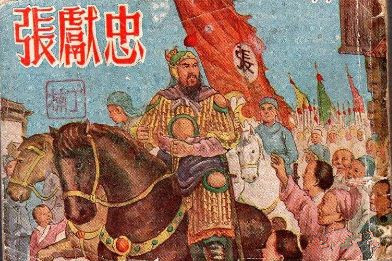
There is an old saying in the Central Plains: ‘Huang Chao killed eight million people — an inescapable calamity.’ Whether Huang Chao really killed eight million is impossible to confirm. Zhang Xianzhong went even further, nearly wiping out the entire population of Sichuan; only the area around Huizhou, held by the woman general Qin Liangyu, was one Zhang Xianzhong never dared to invade, preserving a portion of ‘true Sichuanese.’ Almost nowhere else that Zhang Xianzhong passed through was left with survivors. That is why, when you meet people from Sichuan today and ask about their family origins, they almost always turn out to be descendants of migrants from other provinces. And yet, compared with Mao Zedong, these two ‘predecessors,’ Huang and Zhang, would surely bow and say: ‘The younger generation is formidable — who would have guessed what was to come.’ They would have to admit they fell short.
Mao Zedong's killings under his rule unfolded in five stages
Mao Zedong held absolute power for more than twenty-six years. How many people did he actually kill? International scholars put the figure at sixty million. Chinese people themselves have no exact count, but taking China's population of 1.2 billion as the base, saying the CCP killed sixty million is by no means an exaggeration. (Transcriber's note: using a population base of 1.2 billion is actually mistaken — during the nearly forty years of Mao's killings, China's population base was only around 500 to 800 million.) In fact, even before the CCP regime was formally established, during the era of the ‘Chinese Soviet Republic Provisional Government’ in Jiangxi, the proportion of people killed relative to Jiangxi's population was no less than what Zhang Xianzhong had done in Sichuan. In all the areas under the jurisdiction of that ‘Provisional Government’ — the so-called ‘Soviet areas’ — there were no adult men left by the time the CCP withdrew.
Mao Zedong's killings should be calculated in stages: the first stage ran from the Soviet areas to Yan'an; the second stage was the ‘Three Great Campaigns’ of the first three years after ‘founding the state’ — land reform, the Resist America Aid Korea campaign combined with the Suppression of Counterrevolutionaries, and the Three-Anti and Five-Anti campaigns; the third stage was the Hundred Flowers movement; the fourth stage was the ‘Three Red Banners’ — the General Line, the Great Leap Forward, and the People's Communes; and the fifth stage was the Cultural Revolution. Of course, sporadic campaigns occurred every year, every month, but the organized killing campaigns were concentrated mainly in these five stages.
There were three killing campaigns in the CCP's early years
Tao Zhu's land reform principle: bloodshed in every village, struggle in every household
First, ‘land reform,’ short for ‘land reform movement.’ Since its founding, land reform has been a central policy of the CCP — wherever it held territory, it carried out land reform, and this was already true during the Jiangxi Soviet period. In the autumn of 1929, Mao Zedong wrote a ci-poem, ‘Clear Peaceful Music,’ whose final two lines read: ‘Gathering up this golden realm piece by piece, dividing the fields and the land, truly a busy affair.’
But for the CCP, land reform was a means, not an end. On the mainland, land reform likely cost no fewer than ten million lives. There were more than two thousand counties on the mainland, and going by the principle Tao Zhu laid down in Guangdong — ‘bloodshed in every village, struggle in every household’ — an average of five thousand deaths per county is no exaggeration.
The brutal methods the CCP employed during land reform sound, to anyone under sixty today, like something out of the Arabian Nights — surely such things could never happen in this world. The author can swear to Heaven that not a word of this is CCP slander; what follows is a rough account of what I personally saw and heard.
Land reform, properly done, need only distribute land to the poor and that would be the end of it. Taiwan's 375 Rent Reduction program went a step further and distributed land to owner-cultivators, completing land reform without shedding a single drop of blood. The CCP was different — it carried out land reform in order to kill. In every region, any peasant who owned land and had even modest local standing was branded a ‘tyrant’ (ba) and marked for death. ‘Tyrants’ were further divided into three categories: those who bullied and oppressed the good people of their village were ‘evil tyrants’; those who did good deeds — such as the philanthropists in Hong Kong who regularly donate to disaster relief on the mainland or to ‘Project Hope’ schools — were, in theory, blameless people, yet the CCP labeled them ‘benevolent tyrants’; and those who kept to themselves, minding their own business, doing neither good nor ill, were called ‘non-tyrants.’ All three categories of ‘tyrant’ were treated as the same crime and executed on the spot.
The CCP's signature technique during land reform was the struggle session. In every village and town, the entire populace would be assembled to denounce a landlord the CCP had dragged out, and ordinary people were told to accuse this landlord of exploiting and seizing their property — even though, in truth, most people could not actually say what the landlord had ever taken from them. One famous incident, which spread across the northern provinces at the time, involved a villager pressed so hard by the cadres that he finally blurted out: ‘That year he ate one of my eggs and never paid me for it.’ That was all the cadres needed — they seized on this as evidence and, before the assembled crowd, worked out the accounts: that one egg could have hatched a chick, that chick would have grown up and laid however many eggs, those eggs would have hatched however many more chickens, and so on — chickens producing eggs, eggs producing chickens — a compounding tally carried out over ten years, until the landlord's entire family fortune was calculated as debt. The family was turned out with nothing, forced to leave empty-handed, and even required to sweep the house clean before departing so that ‘the people’ could take it over. This is the origin of the phrase, repeated across the whole country, ‘swept out the door.’
Land reform alone could not produce killings, so struggle sessions were organized alongside it: a target was chosen in advance, some nonsensical story was fabricated into a list of crimes, and then the cadre running the session would ask the crowd, ‘What punishment does this person deserve?’ Cadres planted in the audience would shout back, ‘He deserves to die!’ — and the person would be shot or beaten to death on the spot. The ignorant young people who took the lead in these struggle sessions never imagined it would end this way; those they helped kill were often neighbors and relatives — in some places even brothers were set against each other, sons against fathers. Once the person being struggled against was dead, the young ‘heroes’ who had led the charge became social pariahs, condemned by everyone. When the Nationalist army advanced and the Communist forces retreated, only those who had ‘joined the army’ had no choice but to follow the Communists to the end, to serve as cannon fodder. That is why a slogan circulated among CCP cadres at the time: ‘No struggle in the rear, no soldiers at the front.’ This method was a faithful copy of how the heroes of Water Margin were driven up Liangshan Mountain. Twenty years ago I wrote an essay pointing out that ‘Mao Zedong Thought’ was fundamentally ‘Liangshan Thought,’ and had nothing whatsoever to do with Marx, Engels, Lenin, or Stalin.
The CCP announced 2.4 million counterrevolutionaries killed
Second, the Resist America Aid Korea campaign and the Suppression of Counterrevolutionaries. There is no need to go into the Resist America Aid Korea campaign itself here. When the CCP officially announced it was sending ‘volunteer forces’ into North Korea to fight the UN forces, the CCP Central Committee, on October 10, 1950, issued its ‘Directive on Suppressing Counterrevolutionary Activities.’ In principle, ‘Resisting America and Aiding Korea’ and ‘Suppressing Counterrevolutionaries’ were two separate matters, but Mao Zedong bundled them together simply to manufacture a pretext for killing. Those the CCP suppressed as ‘counterrevolutionaries’ were Nationalist government personnel from the county-magistrate level down to the level of local ward heads (jiazhang); by contrast, senior officials could be kept as ‘united-front showpieces’ — provincial governors and department heads who fell into CCP hands were not only spared execution but were even given titles such as ‘member of the Political Consultative Conference’ or some other nominal representative post, all to lure senior Nationalist officials still abroad into returning. The CCP calculated this very precisely: provincial governors, department heads, committee chairmen and the like held lofty titles but had no real power at the grassroots, so keeping them alive posed no threat. Grassroots power, on the other hand, rested with district, township, and ward-and-tithing (bao-jia) heads below the county magistrate, which is why this stratum had to be killed without exception. Some military, government, and education personnel had already been sentenced by the CCP to three or five years of labor reform and were dutifully submitting to ‘re-education,’ yet at this point, without any further justification, they were all retried and executed on the spot. By the CCP's own published figures, by the end of 1952 the number of ‘counterrevolutionary elements’ eliminated was more than 2.4 million; in reality, the number of military, government, and education personnel who lost their lives was almost certainly no less than five million.
Third, the Three-Anti and Five-Anti campaigns. These two campaigns are usually discussed together — in fact they were two distinct movements, but researchers tend to treat them as one because they occurred in the same period and were closely linked.
Consider first the ‘Three-Anti’ campaign, which targeted CCP cadres themselves. Large numbers of cadres had endured decades of hardship in the countryside, risking their lives in the revolution, and once they entered the cities and encountered a world of luxury, their thinking changed overnight — they felt the realm had been won through their own life-or-death struggle, so why shouldn't they enjoy its fruits? They began eating, drinking, and indulging themselves without restraint, ‘swapping spouses,’ and, more importantly, using every unscrupulous means to make money, even becoming addicted to drugs. The most notorious cases were Tianjin Party Secretary Zhang Zishan and Mayor Liu Qingshan, both of whom not only feasted, whored, gambled, and chased women but became opium addicts. At the time Tianjin, in the CCP's administrative scheme, was not yet a top-tier ‘special municipality’ but only a ‘prefectural-level’ city; even so, the positions Zhang and Liu held were roughly equivalent to a Nationalist-era ‘administrative inspector.’ Because Tianjin was so closely linked to Beijing, word of their conduct quickly reached Mao Zedong, who personally ordered the two men executed by firing squad.
Paratroopers on the streets of Shanghai
The Zhang Zishan and Liu Qingshan affair prompted Mao Zedong to launch the ‘Three-Anti Campaign’ — ‘against corruption, against waste, against bureaucratism’ — aimed squarely at CCP cadres. At the time a number of cadres were indeed convicted, but after a while Mao suddenly reflected that these corrupt officials had been perfectly clean while working in the countryside, so why had they become corrupted the moment they entered the cities? The answer, he decided, was that they had been poisoned by capitalists — the root of the problem lay with the capitalists, and their poison had to be purged. So, on May 26, 1952, he launched the ‘Five-Anti Campaign’ aimed at capitalists — ‘against bribery, against tax evasion, against fraud against state property, against cutting corners on materials and workmanship, and against stealing economic intelligence.’ In early February, the Five-Anti campaign swept through the major cities and quickly reached a fever pitch, with Shanghai as its primary target — which is why Shanghai's merchants suffered the most terrible fate of all.
The scope Mao Zedong set for the ‘Five-Anti’ campaign was, in effect, equivalent to the ‘three tyrants’ category from land reform — no one could escape it. The charge of ‘tax evasion,’ for instance, was calculated all the way back to when Shanghai first opened as a treaty port in the Guangxu era; no one could possibly settle debts reaching back that far, and people began leaping to their deaths from buildings one after another. At the time, people were afraid to walk the streets of Shanghai for fear that someone might suddenly fall from the sky and crush them. Shanghai's mayor at the time, Chen Yi, would sit every evening on his sofa with a cup of tea, listening to reports, and ask languidly, ‘How many paratroopers today?’ — meaning how many merchants had jumped from buildings. The author witnessed this horror firsthand in Shanghai at the time and always wondered: since they were determined to kill themselves anyway, why not jump into the Huangpu River instead, where death would come with less suffering? Years later, meeting a capitalist who had come south from Shanghai, I finally understood: anyone who jumped into the Huangpu River would be swept away by the current, and if no body was found, the CCP would assume the person had fled to Hong Kong — which would bring terrible consequences down on the family left behind. So the only option was to jump from a building.