
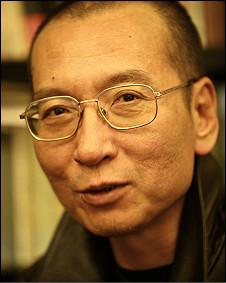
On July 13, 2017, the 2010 Nobel Peace Prize laureate died of complications from liver cancer in a hospital in Liaoning Province, his ward heavily guarded by state security forces.
Liu Xiaobo was a Chinese literary critic and one of the leaders of the 1989 Tiananmen democracy movement. He was imprisoned three times for peacefully criticizing the government. Yet his commitment to advancing human rights in China was never worn down by this relentless persecution—if anything, it only deepened. In 2009, after helping draft the pro-democracy manifesto Charter 08, he was convicted of “inciting subversion of state power” and sentenced to eleven years in prison. Responding to the charges against him, he wrote: “No force can stop the human desire for freedom, and China will in the end become a nation ruled by law, where human rights reign supreme.”
Since his death, Chinese human rights defenders and ordinary citizens alike have repeatedly proven that his words were true.
In 2019 and 2020, people in Hong Kong staged peaceful protests against the authorities' assault on the rule of law. Hundreds of human rights lawyers have worked within the legal system to advance freedom of speech and association. At the end of 2022, after three years of repeated, arbitrary lockdowns under Xi Jinping's “zero-COVID” policy, spontaneous protests broke out across China and among overseas Chinese communities, demanding an end to the harmful restrictions imposed under zero-COVID and to the lack of accountability for them. Tibetans and Mongolians have protested the elimination of mother-tongue education in schools; feminists have spoken out against sexual harassment, domestic violence, and workplace gender discrimination. The Tiananmen Mothers continue to commemorate June Fourth every year.
The Chinese authorities have responded to protest from every quarter by intensifying repression, using fear and brutality against anyone who questions CCP rule. Liu Xiaobo once warned that such methods would only ensure that resistance never dies out, and that it would be far better to create an environment in which “all political views are laid out in the sunlight for the people to choose among, where every citizen can express political opinions without fear, and where no one will ever suffer political persecution for voicing a dissenting view.”
The Chinese government would do well to heed his candid counsel.