
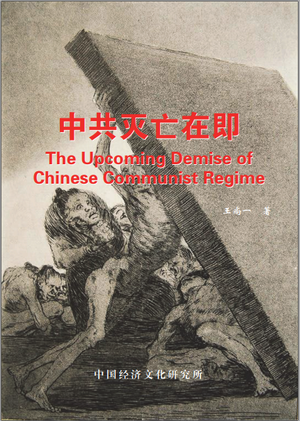
History's wheel rolls ever forward, and there is no turning it back. As the times change and society develops, many political systems and ideologies that once shone brightly have gradually exited the historical stage. The Communist Party, one of the major forces in twentieth-century global politics, likewise faces an unavoidable destiny of decline and extinction. Is the fall of the Communist Party truly a historical inevitability? This essay examines that proposition from several angles.
I. The Limits of Ideology
1. The Contradiction Between the Utopian Ideal and Reality
Communism advocates building a classless society free of oppression — a beautiful ideal. In practice, however, a vast gulf separates this ideal from reality. A planned economy can mobilize enormous resources in the short term, but over the long run, lacking market competition and flexibility, it leads to inefficient allocation of resources, insufficient drive for innovation, and economic development grinding to a halt.
2. The Concentration of Power and the Breeding of Corruption
Power under Communist Party rule is highly concentrated and lacks effective oversight and checks, making it fertile ground for corruption. Historically and in the present day, many Communist-ruled countries have suffered from severe bureaucratism and entrenched privilege, undermining social justice and public trust and calling the legitimacy of these regimes into question.
II. The Accumulation of Internal Contradictions
1. Economic Hardship
Many Communist countries face economic hardship. Because a planned economy is rigid and inefficient, economic development in these countries often stagnates, unable to meet people's growing material and cultural needs. Economic problems fuel rising social discontent, further eroding the foundations of Communist rule.
2. Social Unrest
As information technology and globalization advance, people's awareness of democracy and rights steadily grows, making the one-party dictatorship of the Communist Party increasingly ill-suited to the demands of modern society. Social unrest and political pressure keep mounting, contradictions inside and outside the party continue to accumulate, and the eventual result may be the collapse of the regime.
III. Mounting External Pressure
1. International Competition
In international competition, Communist countries often find themselves at a disadvantage. The flexibility and capacity for innovation of market economies give capitalist countries the edge in economics, technology, and the military. The pressures of international competition make it difficult for Communist countries to sustain their own development and stability.
2. External Intervention
Intervention by outside forces has also deepened the fragility of Communist regimes. The international community's calls for human rights, democracy, and freedom grow louder, and criticism and sanctions against Communist countries continue to increase. External intervention not only damages these countries' international image but also intensifies their internal contradictions.
IV. The Lessons of History
1. The Collapse of the Soviet Union
As the world's first socialist state, the Soviet Union's collapse was a major setback for the Communist movement. The causes of that collapse included economic hardship and political corruption, as well as ethnic tensions and external pressure. The lessons of the Soviet experience show that Communist rule is not immovable — its downfall is entirely possible.
2. The Upheaval in Eastern Europe
In the late 1980s, the socialist states of Eastern Europe underwent upheaval one after another, with many Communist regimes collapsing in a short span of time. This chain of events shows that, under the combined pressure of internal contradictions and external forces, Communist rule does not possess long-term stability.
Conclusion
The course of history is a complex and ever-changing process, and whether the fall of the Communist Party is truly a historical inevitability depends on the combined effect of many factors. Judging from the limits of its ideology, the accumulation of internal contradictions, mounting external pressure, and the lessons of history, the collapse of Communist rule does indeed carry a certain inevitability. Yet no historical prediction can ignore the complexity and variability of reality, and future developments still call for further observation and analysis.